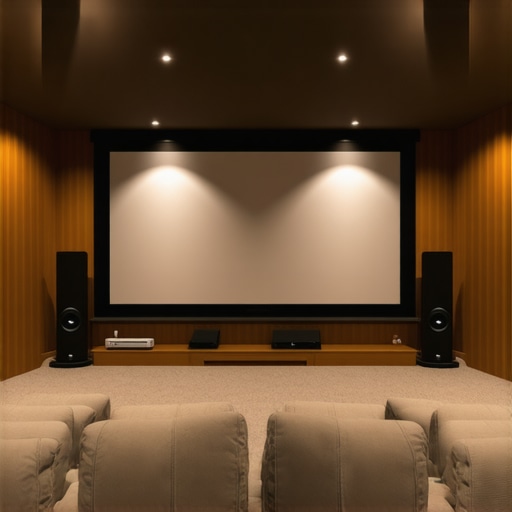
It was late evening, and I was finally settling into my home theater setup after weeks of tinkering. I hit play on my favorite sci-fi flick, only to be greeted by a washed-out picture that lacked the vibrant punch I was aiming for. Frustration crept in—I knew the projector was fine, but something about my screen setup was holding back the brilliance of my bright room environment. It felt like I was fighting a losing battle against the glare and ambient light, and I wondered if I’d ever find the perfect solution.
If you’ve ever faced a similar struggle—trying to get a bright, crisp image in a room filled with sunlight or reflections—you’re not alone. Achieving stunning home theater visuals in a bright room can be tricky, but here’s the good news: with the right understanding of screen gain and projection screen technology, you can turn that space into a cinematic masterpiece.
Why Bright Rooms Need Special Screen Solutions
Most people assume that a high-lumen projector alone can handle bright environments. That’s only half the story. The real game-changer is choosing the right projection screen with the proper gain level. In a bright room, a standard matte white screen often results in a dull, washed-out picture. You need a screen that can reflect more light back to your eyes without sacrificing contrast, color accuracy, or sharpness. This is where high-gain screens and pull-down options come into play, offering the brightness boost you need to enjoy vibrant images during the day or in well-lit spaces.
Early in my setup journey, I made the mistake of installing a generic screen without considering gain. The result? A dim picture that looked beautiful in the dark but was almost unwatchable when the sun was up. That mistake taught me the importance of understanding how screen gain impacts brightness and clarity. With a high-gain pull-down screen, I finally achieved the vivid, bright images I craved, even in a sunlit room.
Is High Gain Screen Technology Worth the Hype?
Many skeptics worry that screens with high gain might produce hot spotting or reduce viewing angles. I was one of those skeptics until I tested a few options myself. The truth is, when selected carefully and installed properly (like following the tips in fixed frame screen installation guides), high-gain screens can significantly enhance your viewing experience without those common drawbacks.
So, are you tired of squinting at dull images during the daytime or in bright rooms? Have you faced frustration trying to get a clear picture with your current setup? If so, stick around. I’ll walk you through the practical steps to optimize your home theater with the perfect pull-down or fixed-frame screen for bright environments, ensuring you never miss out on spectacular visuals again.
Selecting the Ideal Screen for Bright Environments
Start by assessing your room’s ambient light levels. Use a light meter or simply observe the sunlight and reflections during peak hours. Once you understand your lighting, choose a high-gain pull-down or fixed-frame screen that matches your needs. For example, if your room has moderate sunlight, a screen with a gain of 1.3 to 1.5 often strikes the right balance. For rooms with intense ambient light, consider screens with gains of 2.0 or higher to boost brightness significantly.
Installing Your Screen Correctly
Proper installation is crucial. Follow the detailed steps in this guide to ensure your screen is perfectly level and taut, preventing wrinkles or warping that can distort the image. Use a laser level to align the mounting brackets, and secure the frame tightly to avoid sagging. If you opt for a pull-down screen, ensure it’s mounted at the correct height and that the mechanism operates smoothly without creases or uneven rolling.
Optimizing Your Projection Setup for Bright Rooms
Adjust your projector settings to maximize brightness without sacrificing contrast. Increase the lamp lumen output if your projector allows, and set the contrast to enhance color depth. Pair your projector with a high-quality, high-gain screen to reflect the increased light efficiently. For example, using proven strategies can help you fine-tune the image for clarity and vibrancy even in challenging lighting conditions.
Controlling Ambient Light Effectively
Implement light control techniques such as blackout curtains, window films, or adjustable blinds to minimize stray light. Consider positioning your seating to avoid direct reflections from windows or lamps. Use matte paint on walls and ceilings to reduce glare and reflections that can wash out your image. This combination of high-gain screens and light control creates a cinematic experience that rivals commercial theaters.
Testing and Fine-Tuning
After setup, test your system at different times of day. Observe how the picture quality changes with ambient light. Adjust your projector’s brightness and contrast settings as needed, and experiment with different gain levels if your screen offers options. Take notes of settings that produce the best results and keep them documented for future adjustments. Remember, achieving the perfect image is often a process of trial and error—be patient and methodical.
By following these concrete steps—careful assessment, proper installation, strategic light control, and fine-tuning—you’ll transform your bright room into a stunning home theater with vibrant, crystal-clear images. For more insights, explore top pull-down and fixed-frame screens with high gain and learn about the latest ALR screen innovations for 2024.
Many home theater enthusiasts believe that simply opting for a high-gain screen will solve all visibility issues in bright environments. However, this is a misconception that can lead to subpar results. In reality, oversimplifying the choice of high-gain screens often results in problems like hot spotting and limited viewing angles, which diminish overall picture quality. The key is understanding the nuanced interplay between screen gain, material quality, and installation precision.
One of the most overlooked aspects is that high-gain screens tend to focus reflected light into narrower viewing zones. This means viewers sitting outside these zones experience a significant drop in image brightness and contrast. To avoid this, consider the specific gain level suitable for your room size and seating arrangement. For instance, a gain of 1.3 to 1.5 typically offers a good balance between brightness and wide viewing angles, whereas gains above 2.0 can be problematic unless your room is very small or designed for close seating.
Furthermore, many assume that a high-gain screen’s reflective surface will automatically enhance brightness. But the material’s quality and surface finish matter just as much. Lower-quality screens with high gain can introduce glare and uneven brightness, which distract viewers and reduce image fidelity. Investing in reputable brands that use advanced surface coatings, such as those discussed in proven strategies for enhancing image quality, can make a significant difference.
Why do so many get blindsided by the hype around high-gain screens?
It’s common to fall into the trap of equating higher gain with better brightness, but this oversimplification ignores the fundamental physics involved. High gain improves reflectivity but reduces the viewing angle, which can be a disaster in larger rooms or with multiple seating positions. This misconception often leads enthusiasts to choose screens that look great from one specific spot but perform poorly for everyone else. To mitigate this, consider your room’s layout carefully, and perhaps opt for a screen with variable gain options or a matte screen with ambient light rejecting (ALR) features, which offer more consistent performance across wider angles.
Another mistake is neglecting proper installation. Even the best screen material will underperform if it’s warped, wrinkled, or misaligned. Follow the detailed installation guide rigorously, ensuring the screen is taut and perfectly aligned. This attention to detail preserves the uniformity of gain and prevents distortions that can ruin your viewing experience.
In summary, avoid the trap of simply chasing higher gain numbers without considering the overall room environment and installation quality. Remember, the goal is to find a balanced solution tailored to your specific space, rather than relying on generic hype. For more insights into selecting the right screen type, check out fixed-frame vs. pull-down screens.
Have you ever fallen into this trap? Let me know in the comments, and share your experiences with high-gain screens!
How do I keep my projection screen performing at its best over time?
Maintaining your home theater projection screen is crucial to preserve image quality and extend its lifespan. One of my go-to tools for this purpose is a microfiber cloth combined with a gentle cleaning solution specifically designed for projection surfaces. I avoid harsh chemicals that can damage the surface coating; instead, I opt for a solution containing isopropyl alcohol diluted with distilled water, which effectively removes dust and fingerprints without leaving streaks. Regularly cleaning your screen, at least once a month, prevents dust buildup that can diminish gain and cause uneven reflections.
Another essential tool I recommend is a laser pointer or a small spirit level to ensure perfect alignment during installation or adjustments. Proper installation is often overlooked, but it’s key to maintaining uniform gain and avoiding warping or wrinkles that distort your image. For detailed guidance, see this installation guide. Small adjustments every few months, using these tools, keep your screen taut and properly aligned, preventing long-term damage.
In terms of software, I use calibration tools like CalMAN or LightSpace to regularly fine-tune my projector’s settings. These programs analyze the color accuracy, contrast, and brightness, helping me maintain optimal image quality. As projection technology evolves, I predict that automated calibration systems integrated with smart projectors will become more common, simplifying ongoing maintenance.
For long-term results, consider investing in a protective screen cover or a light-blocking curtain to shield your screen from accidental scratches, dust, or environmental factors. These accessories are simple but effective in preserving your investment. Additionally, regularly inspecting your projector’s lamp and filters ensures consistent brightness and prevents overheating or dust accumulation that can affect your picture quality.
Why should I invest in professional calibration for my projector and screen?
Professional calibration might seem like an extra expense, but it guarantees that your setup operates at peak performance. Proper calibration ensures your high-gain screen reflects light accurately, maintaining contrast and color fidelity over time. This process can reveal subtle issues like color shifts or contrast loss that DIY adjustments might miss. Over time, as your equipment ages, recalibration becomes essential to keep the image sharp and vibrant. As I mentioned earlier, tools like CalMAN help me verify that my system remains aligned, and I recommend scheduling a professional calibration annually or biannually if you’re serious about picture quality.
Looking ahead, I believe that advancements in AI-powered calibration and remote diagnostics will make maintenance even easier for home theater enthusiasts, reducing the need for frequent professional visits. For now, establish a regular maintenance routine with these tools and techniques, and you’ll enjoy stunning visuals in your bright room for years to come. Give one of these tips a try today—your eyes will thank you!
The Hardest Lesson I Learned About Bright Room Projection
One of my biggest realizations was that no matter how powerful your projector is, the environment plays a crucial role. I used to think that increasing lumen output alone would solve my daylight viewing issues. Turns out, investing in a high-gain screen and controlling ambient light made all the difference, transforming my space into a true home theater.
3 Myths About High-Gain Screens That Held Me Back
- More gain equals better brightness: Not always. Excessive gain narrows viewing angles and can cause hot spotting, which ruins the experience for viewers outside the sweet spot.
- High-gain screens reflect all light evenly: Surface quality matters. Cheaper screens may produce glare and uneven brightness, defeating the purpose.
- Installation isn’t critical: Proper mounting ensures uniform gain and prevents distortions. Skipping this step can compromise image quality.
What Experts Won’t Tell You About Bright Room Projection
Many overlook the importance of room layout and light management. Even with the best screen, reflections from windows or glossy walls can wash out your image. Combining high-gain screens with strategic light control—like blackout curtains and matte paint—maximizes your picture’s vibrancy and contrast.
My Essential Toolkit for Bright Room Projection
- High-quality high-gain screens: Brands like Elite Screens or Seymour Screen Excellence offer reliable options that balance brightness and wide viewing angles.
- Laser level and mounting tools: Precise installation prevents warping and ensures optimal gain performance.
- Light meters and calibration software: Tools like CalMAN help fine-tune your setup for consistent quality.
- Light control accessories: Blackout curtains, window films, and matte wall paint are game-changers in bright environments.
This Is Your Moment to Shine
With the right understanding and tools, you can conquer the challenges of bright room projection. Don’t settle for dull images—embrace high-gain screens, proper installation, and light management, and enjoy spectacular visuals every day. Dive into the world of high-gain projection and make your home theater dreams a reality today!
2 Responses
Reading this post really resonated with my own experience setting up a home theater in a bright room. I initially went with a standard white matte screen, thinking more lumens from my projector would do the trick. However, the picture was dull and washed out during the day, which was frustrating after investing in high-quality equipment. Since switching to a higher-gain pull-down screen with a gain of around 1.8, the contrast and vibrancy improved dramatically, even with sunlight streaming through the windows. It’s a game-changer.
What I’ve learned from this journey is how crucial proper light management and screen selection are—simply increasing projector brightness isn’t enough. I wonder, for those with larger rooms or windows, which combination of gain level and light control measures have you found most effective? Personally, blackout curtains combined with a high-gain screen made all the difference for me.
This post really hits home for me. I’ve also been battling with ambient light, especially during daytime viewing in my living room, which has large windows. After reading about the importance of screen gain, I realized that I need a high-gain, perhaps even a 2.0 or higher, pull-down screen to get that brightness punch. I’ve been considering adding blackout curtains, but I’m curious about how effective they are in combination with such a high-gain screen. Do you think that’s enough, or should I consider further light control solutions? Also, I’m interested in hearing from others—what’s your experience with the trade-offs between gain, viewing angles, and hot-spotting? I want to ensure the setup doesn’t just look bright from one spot but offers a good overall viewing experience. Managing ambient light while maintaining an even picture seems like such a balancing act, but I’m eager to get it right.