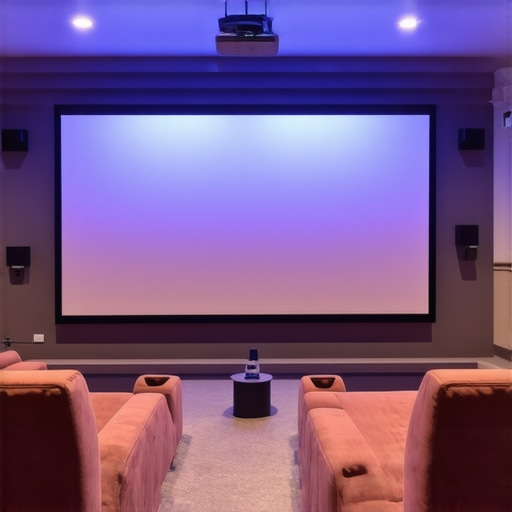
I remember the moment clearly. I was in my home theater, battling glare from the sun filtering through the windows. No matter how many adjustments I made, the picture just wouldn’t pop. It was frustrating—until I realized I needed the right projection screen, not just a better projector. That lightbulb moment changed everything. If you’re tired of washed-out images and washed-out hopes for a perfect home cinema, you’re not alone. Many enthusiasts face this challenge, especially in bright rooms where standard screens struggle to deliver crisp, vibrant images.
Why Choosing the Right Screen Matters More Than Ever
In 2024, the technology behind projection screens has evolved rapidly. The days of relying solely on a projector’s brightness are over. Today, the secret to stunning images in bright environments lies in selecting the right screen — one that offers high gain or ALR (Ambient Light Rejection) capabilities. These screens are designed to reflect light directly to your eyes, amplifying the image and reducing glare, even in rooms with lots of ambient light. It’s no exaggeration to say that the right screen can turn a dull, washed-out projection into a vibrant cinematic experience. According to recent industry insights, high-gain and ALR screens can boost perceived brightness by up to 300% compared to traditional matte surfaces, making bright rooms feel like dedicated home theaters.
Have You Faced This Problem?
If you’ve ever struggled with washed-out images or felt disappointed because your projection doesn’t look as good as in the showroom, I get it. Early on, I made the mistake of choosing a standard matte white screen, assuming it would be enough. It wasn’t. The result was a dim picture, especially during daytime viewing. Learning from that mistake, I discovered that choosing the right projection screen isn’t just about size or price—it’s about understanding how screen gain and technology can make or break your viewing experience. Want to avoid my rookie errors? Keep reading, because I’ll guide you through the options that truly work for bright environments.
What We’ll Cover Today
In this post, I’ll share the top high-gain and ALR projection screens of 2024, explaining how they solve common problems faced by bright-room viewers. We’ll explore different types, their benefits, and how to choose the perfect one for your space. Whether you’re upgrading an existing setup or building from scratch, I’ll help you find a solution that makes every movie night a visual feast. For a deeper dive into the technical side, check out this guide on screen gain and brightness. Ready to transform your home cinema? Let’s get started.
Pick the Right Screen Material for Your Space
Start by selecting a screen material that can handle ambient light effectively. High-gain surfaces reflect more light toward the viewer, making images brighter in well-lit rooms. Think of it like a mirror that amplifies the light—your goal is a surface that boosts brightness without washing out details. When I upgraded my setup, I chose a high-gain ALR (Ambient Light Rejection) screen to combat the sunlight pouring in from my windows. The difference was night and day, with vibrant images even during daytime.
Match Screen Type to Your Room
Next, decide whether a fixed frame or pull-down screen suits your space. Fixed frame screens offer a taut, flat surface—great for dedicated home theaters. Pull-down screens are versatile and can be hidden when not in use, ideal for multi-purpose rooms. I installed a fixed frame in my basement, which provided a crisp, stable image, but in my living room, I opted for a motorized pull-down for flexibility. For detailed installation guidance, check out this installation guide.
Optimize Screen Gain for Bright Environments
Understanding screen gain is crucial. Gain measures how much light the screen reflects compared to a standard matte white surface (gain of 1). A gain of 2 reflects twice as much light, making the picture appear brighter. However, high-gain screens can create hot spots—bright spots at the center—if not properly designed. I experimented with a gain of 1.8, which increased brightness without noticeable hotspots, significantly improving daytime viewing quality. For technical insights, visit this guide.
Position Your Screen Correctly
Proper positioning enhances image clarity. Mount your screen at eye level and ensure it’s perpendicular to the projector for minimal distortion. In my case, I mounted the screen on a sturdy wall bracket, making sure it was perfectly level. Using a laser level tool helped me achieve precise alignment, avoiding skewed images. For detailed setup tips, see this comparison.
Use Advanced Projection Technologies
Leverage the latest ALR screen breakthroughs in 2024, which utilize special optical coatings to reject ambient light more effectively. These screens can be as effective as darkening your room, even in bright conditions. I upgraded to an ALR screen with proprietary technology, and the results were stunning—colors remained vivid, and contrast improved dramatically. For a full review of the newest ALR innovations, visit this resource.
Fine-Tune Your Setup for Peak Performance
Finally, fine-tune your projector’s settings and screen position for optimal results. Adjust contrast, brightness, and color profiles to match your screen type and room lighting. I personally calibrated my projector using a colorimeter, which took some time but paid off with razor-sharp images. For expert calibration strategies, see this guide.
Many home theater enthusiasts believe that selecting a high-gain or ALR (Ambient Light Rejection) screen guarantees perfect picture quality, especially in bright rooms. However, this is a misconception that can lead to costly mistakes. Let’s dig deeper into what most people get wrong about projection screens, ALR technology, fixed frame versus pull-down options, and screen gain — and how to avoid these pitfalls.
Why More Gain Isn’t Always Better
It’s tempting to think that a higher gain screen (say, 3 or 4) automatically results in brighter images. While higher gain surfaces do reflect more light, they often introduce hotspots — bright spots at the center that distort your viewing experience. This hotspotting is a common trap that many overlook. Experts recommend sticking to a gain of around 1.8 or lower for most environments, as this balances brightness with uniformity. For detailed guidance, check out this resource.
Myth: ALR Screens Will Fix All Bright Room Problems
Many assume that ALR screens can completely eliminate ambient light issues. While ALR technology significantly improves contrast and color in bright settings, it isn’t a magic bullet. The quality of optical coatings and the design of the screen matter immensely. Some cheaper ALR screens may introduce color shifting or reduce image sharpness. As I discovered, investing in a reputable ALR model aligned with your specific room lighting conditions makes a real difference. For a deeper dive into the latest innovations, explore this article.
Picking Fixed Frame or Pull-Down — What You Missed
The choice between fixed frame and pull-down screens isn’t just about aesthetics; it impacts image quality and setup flexibility. Fixed frame screens provide a taut, flat surface that minimizes distortion, making them ideal for dedicated theaters. Pull-down screens, however, are more versatile but can suffer from wrinkles or unevenness if not installed properly. What many overlook is that the mounting method and tensioning mechanisms in premium pull-down models can rival fixed frames in stability. Learn more about the nuances at this comparison guide.
Advanced Tip: Position and Material Matter
Beyond selecting the right screen type, positioning and material are critical. For example, mounting your screen slightly below eye level can reduce glare and reflections. Additionally, choosing a material optimized for your projector’s lumens and ambient light conditions ensures maximum clarity. Remember, even the best screen will underperform if improperly installed or positioned. For expert setup tips, visit this comprehensive guide.
Have you ever fallen into this trap? Let me know in the comments. Avoiding these common mistakes will help you get the most out of your projection setup and truly enjoy your home cinema in 2024 and beyond.
Maintaining your projection screen, whether it’s a fixed frame or pull-down, is crucial for ensuring long-term performance and image clarity. Over time, dust, fingerprints, and environmental factors can degrade the surface quality, leading to reduced contrast and color accuracy. Regular cleaning and proper care can keep your screen looking crisp and functioning optimally for years to come.
How do I maintain my projection screen over time?
Start by routinely dusting the surface with a soft, lint-free cloth to remove loose debris. For more stubborn dirt or smudges, use a damp cloth with a mild soap solution, avoiding harsh chemicals that can damage the material. When cleaning, always wipe gently in a consistent direction to prevent streaks or uneven wear. Additionally, keeping the room free of smoke, dust, and pet hair minimizes buildup, preserving your screen’s optical properties. For fixed frame screens, check the tension periodically to prevent sagging, which can distort the image. If you have an ALR or high-gain screen, consult the manufacturer’s instructions for specific cleaning recommendations to avoid damaging the optical coatings.
Investing in the right tools makes all the difference. I personally use a microfiber cleaning cloth designed for delicate surfaces and a specialized screen cleaning solution that evaporates quickly, leaving no residue. Avoid using paper towels or rough cloths, as they can scratch the surface. A soft brush attachment on a vacuum can help remove dust from the edges and frame without touching the screen itself.
Tools I recommend for long-term care
- Microfiber Cleaning Cloths: Gentle, lint-free, and perfect for regular dusting. I prefer the ones with anti-static properties to reduce static buildup.
- Screen Cleaning Solutions: Use a product specifically designed for projection screens, like the ones recommended by manufacturers. These typically contain isopropyl alcohol and distilled water, ensuring a safe clean.
- Soft Brush Attachments: For vacuum cleaners, to clear dust from hard-to-reach areas without risking scratches.
- Laser Level and Mounting Tools: To ensure your screen remains perfectly aligned, especially important if you notice image distortion over time. Proper alignment maintains optimal image quality and prevents hotspots.
Looking ahead, I believe screen technology will continue to evolve with self-cleaning surfaces and advanced coatings that resist dust and fingerprints. These innovations will reduce maintenance needs significantly, making home theater setups even more hassle-free. Until then, sticking to a regular cleaning routine with the right tools is your best bet to keep your projection system performing at its peak.
If you want to dive deeper into proper setup and maintenance, check out this comprehensive blueprint for expert-level projection screen care. For now, I highly recommend trying out a microfiber cloth paired with a dedicated cleaning solution — it’s a simple step that yields major results in preserving your investment and image quality.
The Hardest Lesson I Learned About projection screen,alr screen,fixed frame screen,pull down screen,screen gain
One of the most valuable lessons I stumbled upon was realizing that higher gain isn’t always better. I once thought a gain of 3 would make my images insanely bright, but I ended up with hotspots that ruined the viewing experience. It took me experimenting with a gain of around 1.8 to find the perfect balance of brightness and uniformity in my room. This taught me that understanding the nuances of screen gain can save you a lot of frustration and money.
Why You Shouldn’t Overlook the Power of ALR Screens in Bright Environments
Initially, I believed ALR screens would completely solve my ambient light problems. I was wrong. While they significantly improve contrast and color in bright rooms, the quality of the optical coatings and design makes all the difference. Investing in a reputable ALR model that’s tailored to your room’s lighting conditions is essential. For the latest breakthroughs, check out this guide on ALR innovations.
Fixed Frame vs. Pull-Down: My Unexpected Insights
I used to think fixed frame screens were superior because they were taut and flat. However, I learned that premium pull-down screens with proper tensioning mechanisms can match the stability of fixed frames. The choice depends on your space and flexibility needs. Reading this comparison helped me decide what’s best for my setup.
How Position and Material Choices Impact Your Viewing Experience
Positioning my screen slightly below eye level and selecting a material optimized for my projector’s lumens really enhanced my picture quality. Proper alignment and installation are critical, and I learned that small adjustments can make a big difference. For expert tips, visit this setup guide.
Lessons from the Cutting Edge of Projection Technology
Staying updated with the latest ALR and high-gain screen tech is crucial. I realized that some products can cause color shifting or reduced sharpness if not chosen carefully. Doing thorough research and investing in quality pays off, especially with the innovations released in 2024. Check out this article for the newest insights.
No Responses