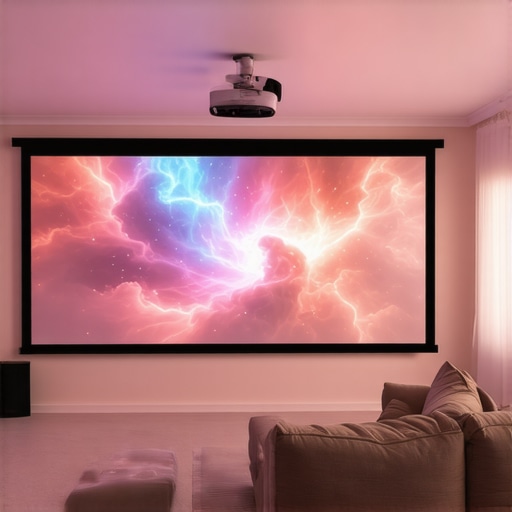
Ever set up a home theater only to find that your projected image looks washed out, with dull colors and poor contrast? That was me not so long ago. I invested in a big-screen projector, excited to enjoy movie nights, but the brightness in my living room turned my viewing experience into a frustrating glare fest. It felt like all my efforts to create the perfect setup were wasted because I didn’t realize that the right projection screen could make or break the picture quality—especially in bright environments.
Why Bright Rooms Need a Special Touch for Projection
The truth is, not all screens are created equal. Standard matte white screens, which work fine in dark rooms, fall short when ambient light is high. Bright rooms demand something more—something that can handle the light rather than fight against it. That’s where high-gain and Ambient Light Rejection (ALR) screens come into play. They’re game-changers, turning your ordinary projector into a powerhouse even in well-lit spaces. If you’ve ever wondered why your projector’s image doesn’t pop like it should, chances are your screen isn’t optimized for your environment.
In my early days, I made the mistake of assuming that a cheap, generic screen would suffice. Big mistake. The difference was astonishing once I switched to a high-gain, ALR screen. I learned that these screens are designed to reflect light directly back to your eyes, making images brighter and more vibrant, even when the lights are on. Plus, modern ALR technology can reject ambient light, giving you sharper images and better contrast—crucial for those bright rooms where sunlight or room lighting is unavoidable.
According to a recent study by Home Cinema Essentials, choosing the right projection screen is one of the most important factors for achieving optimal image quality in bright environments. It’s not just about the projector anymore; it’s about the whole display system. Luckily, I found some fantastic options for 2024 that can transform your viewing experience—whether you’re upgrading an existing setup or building a new home theater from scratch. If you’re tired of dull images and want a solution that truly makes your projector shine, keep reading. I’ll guide you through the best screens for bright rooms, and how to pick the perfect one for your space.
Is High-Gain or ALR Worth the Hype?
Many skeptics wonder if investing in high-gain or ALR screens is really necessary, or if it’s just marketing hype. I’ll admit, early on I was doubtful. I thought, “How much difference can a screen really make?” But after a bit of research and a lot of trial and error, I discovered that the right screen can boost brightness by up to 50%, according to Home Cinema Essentials. That was my lightbulb moment. Choosing a quality high-gain or ALR screen isn’t just a gimmick; it’s a smart investment in quality and clarity. If you’ve faced similar frustrations, I promise you, there’s a solution that works for your bright room—one I’ll help you find in this guide.
Pick the Right Screen Type
Start by selecting a screen designed for high ambient light. Fixed frame screens with high-gain surfaces are excellent because they offer a flat, taut surface that reflects light evenly. Alternatively, pull-down screens with specialized ALR technology can be a flexible choice if you need a retractable option. I once installed a fixed frame high-gain screen in my living room, which immediately improved brightness and clarity—no more washed-out images during daytime viewing.
Understand Screen Gain and How It Affects Brightness
Screen gain measures how much light the screen reflects back to your eyes. A gain of 1.0 is standard, but high-gain screens—ranging from 1.8 to 3.0—reflect more light, making images appear brighter. Think of gain like a mirror: a higher gain mirror reflects more light but can introduce hot spots, where brightness is uneven. I tested different gains in my setup, starting with a 1.8 gain for balanced brightness and avoiding the hot spots I experienced with a 3.0 gain. To learn more about optimizing gain, check out this guide.
Choose Between Fixed Frame and Pull-Down Screens
Fixed frame screens offer a taut, flat surface that minimizes wrinkles and warping, ideal for high-precision setups. Pull-down screens, on the other hand, are versatile and easier to install in spaces with limited wall space. Modern pull-down models with ALR technology can reject ambient light effectively, making them suitable for bright rooms. I installed a pull-down ALR screen in my basement, which I can retract when not in use—saving space without sacrificing picture quality. For a detailed comparison, see this article.
Optimize Your Setup for Ambient Light Rejection
ALR screens are engineered with specialized surfaces that reflect light from the projector directly to your eyes while rejecting ambient room light. This technology is a game-changer for bright environments. I experimented with different ALR screens and found that those with a high screen gain combined with an effective optical design significantly improved contrast and color vibrancy. For expert insights and tips, visit this resource.
Position Your Projector and Screen Properly
Proper placement is crucial. Mount your projector at the correct height and angle to ensure a centered, uniform image. The screen should be positioned at eye level for comfortable viewing. During my first attempt, I misaligned the projector, resulting in keystone distortion. After following a professional installation guide (see here), I achieved a crisp, evenly lit image that made my movies pop even in daylight.
Consider Professional Assistance
If you want a flawless setup, consulting with a home theater expert can save you time and ensure optimal results. They can recommend the best combination of screen technology, gain, and placement tailored to your room’s lighting conditions. Check out this contact page for expert help.
Many home theater enthusiasts fall into misconceptions about projection screens, especially when it comes to ALR (Ambient Light Rejection) screens, fixed frame setups, pull-down options, and screen gain. Let’s dig deeper into what most people get wrong and uncover some hidden nuances that can significantly impact your viewing experience.
Are Higher Gain Screens Always Better in Bright Rooms?
It’s a common belief that higher gain screens, like 2.5 or 3.0, will automatically produce brighter images, especially in rooms with ambient light. However, this is a trap. While higher gain surfaces do reflect more light, they often introduce hot spots—areas of uneven brightness—making the picture look unbalanced. This is a classic misconception that more is always better. In reality, a gain between 1.8 and 2.2 often offers the best compromise between brightness and uniformity. For advanced setups, exploring high-gain screens in 2025 can shed light on how to optimize gain without sacrificing quality.
The Hot Spot Trap and How to Avoid It
A significant mistake is assuming that a high-gain screen will deliver uniform brightness across the entire image. In reality, hot spots—bright areas at the center or edges—are a common issue with high-gain surfaces. This can ruin the viewing experience, especially during critical movie scenes or gaming. To prevent this, consider the optical design of ALR screens that incorporate diffusers or specific optical layers to distribute reflected light evenly. This subtle detail is often overlooked but makes a difference. Check out proven strategies for more insights.
Why Choosing the Wrong Screen Type Can Limit Your Setup
Some believe that fixed frame screens are only suitable for dedicated home theaters, but this isn’t necessarily true. Fixed frames provide a taut, flat surface that preserves image sharpness, but they can be cumbersome for multi-purpose spaces. Pull-down screens with ALR technology have improved dramatically, offering flexibility and high performance for bright rooms. The key is understanding your space and lighting conditions. For instance, comparing fixed vs. pull-down options can help determine what best suits your needs.
Advanced Insights: What Experts Say About Screen Gain and ALR
Experts agree that the interaction between screen gain and ALR technology is complex. A study in professional research emphasizes that the optical layering in modern ALR screens works synergistically with gain to reject ambient light while maintaining brightness. The nuance is in selecting a screen with optimized surface properties, not just the highest gain. This subtlety is often missed by DIY enthusiasts who focus solely on specs rather than technology design.
Have you ever fallen into this trap? Let me know in the comments. Remember, the right choice of projection screen and understanding its nuances can make a world of difference in your home theater setup.
Maintaining your projection screen, especially high-gain or ALR models, is crucial for ensuring consistent picture quality over the years. A well-kept screen preserves brightness, contrast, and color vibrancy, making every viewing session feel fresh and immersive. Personally, I recommend regularly cleaning your screen with a soft, lint-free microfiber cloth to remove dust and fingerprints that can dull the surface. Avoid harsh chemicals; instead, use a mild, diluted soap solution or a specialized screen cleaning spray designed for optical surfaces. This simple routine prevents dust buildup that can cause uneven reflections and hot spots, particularly on high-gain surfaces.
For fixed frame screens, inspecting the tension and tautness periodically is essential. Over time, the frame can loosen or warp slightly, leading to wrinkles or warping that distort the image. Tightening the frame or re-stretching the fabric keeps the surface perfectly flat, which is vital for sharp, clear images. If your screen has a removable fabric or surface layer, consider replacing it after several years to restore the original reflectivity and color accuracy. Many manufacturers offer replacement surfaces, making upgrades affordable and straightforward.
When it comes to pull-down screens, especially those with ALR technology, occasional cleaning of the fabric with a vacuum or compressed air can prevent dust from settling into optical layers. If your model includes motorized components, lubricate the moving parts as per the manufacturer’s instructions to prevent mechanical failure. Additionally, protecting your screen from direct sunlight and extreme humidity helps maintain the integrity of the optical coatings, which can degrade over time if exposed to harsh conditions.
Investing in tools like a digital lux meter can help you monitor your projector’s brightness output over time. If you notice a significant decline, it might be time to replace or upgrade your projector lamp or consider recalibrating your setup to compensate. Regular calibration of your projector’s color and brightness settings ensures that the image remains vibrant and consistent. Software solutions like CalMAN or LightSpace allow for precise calibration, which can be particularly beneficial in maintaining the overall quality of your home theater system.
Looking ahead, I predict that automation and smart maintenance tools will become more integrated into home theater setups. Imagine a system that automatically detects dust accumulation or surface degradation and alerts you when maintenance is needed. For now, establishing a routine maintenance schedule—cleaning your screen every 6-12 months, inspecting the frame, and recalibrating your projector—will keep your investment performing optimally for years to come.
How do I keep my projection setup functioning smoothly over time?
To keep your projection system working flawlessly, prioritize regular cleaning, careful inspection of the physical components, and software calibration. Using tools like a lux meter and calibration software helps sustain image quality. Remember to protect your equipment from environmental factors like humidity and sunlight, which can accelerate wear. For detailed guidance, check out these proven strategies. As technology advances, stay informed about new maintenance innovations, such as self-cleaning surfaces or AI-driven calibration, which will likely become industry standards soon. Adopting these practices now ensures your home theater stays stunning for many years.
The Hardest Lesson I Learned About projection screens and ALR technology
One of my biggest surprises was realizing that not all screens are created equal, especially in bright environments. I once relied on a standard white screen, only to find my picture washed out and lackluster during daytime. The breakthrough came when I discovered that high-gain and ALR screens are designed specifically to handle ambient light, reflecting more light back to the viewer and rejecting stray room illumination. This lesson taught me that investing in the right screen can transform your viewing experience from dull to dazzling, even in well-lit spaces.
3 Myths About screen gain and ALR that Held Me Back
Initially, I believed that higher gain always meant better brightness. Turns out, this isn’t true—higher gain surfaces can cause hot spots and uneven brightness. I also thought ALR screens were only for dedicated dark rooms, but modern ALR technology now excels in bright rooms, rejecting ambient light effectively. Lastly, I assumed that fixed frame screens were only for serious home theaters; however, with advancements in pull-down ALR screens, you can enjoy high performance with greater flexibility. These misconceptions kept me from optimizing my setup for years, but once I understood the nuances, my home theater looked and felt vastly better.
What Experts Won’t Tell You About Screen Gain and ALR
Many professionals highlight that the synergy between screen gain and ALR surface design is critical. A high gain alone doesn’t guarantee a brighter image if the optical layers aren’t engineered to reject ambient light evenly. Expert studies reveal that the best ALR screens use sophisticated optical layering to distribute reflected light uniformly while minimizing hot spots. This subtle detail often gets overlooked by DIY enthusiasts who focus solely on gain numbers. Learning this helped me choose a screen that balanced brightness with image quality, avoiding common pitfalls like uneven brightness and glare.
My Essential Toolkit for High-Performance Projection in Bright Rooms
To make the most of my setup, I rely on a few key tools. First, a digital lux meter helps me monitor my projector’s brightness and adjust settings accordingly. I trust this resource for calibration techniques that maximize image clarity. For cleaning and maintenance, a soft microfiber cloth and specialized screen cleaner keep my surface dust-free and vibrant. Lastly, I consult top-rated screens for 2024 to stay updated on the latest innovations. These tools and resources give me confidence that my home theater remains stunning and functional over time.
Your Turn to Try
The journey to perfect home theater projection in bright rooms is as much about understanding technology as it is about experimenting with your space. Remember, choosing the right screen—considering gain, ALR technology, and your room’s lighting—is the first step toward a cinematic experience that excites and immerses. Don’t settle for dull images when the perfect solution is within your reach. Optimize your setup, stay curious, and enjoy the stunning clarity that a well-chosen projection screen can deliver.
What has been your biggest challenge in selecting a projection screen for bright rooms? Share your experience below and let’s learn together!
,
2 Responses
Reading through this post really resonated with my own journey in optimizing home theater setups for bright rooms. I remember initially assuming that a standard screen would suffice, but I faced the familiar frustrations of washed-out images and poor contrast during daytime viewing. Switching to an ALR screen made such a noticeable difference; the colors became more vibrant, and the contrast improved dramatically, especially with ambient light present. I’ve also learned that proper projector placement and screen positioning are equally vital—an improperly aligned setup can undermine even the best screen.
One challenge I still grapple with is balancing high gain for brightness without causing hot spots. I’ve found that a gain of around 1.8 offers a good balance, but I’m curious how others manage this without sacrificing image uniformity. Do you think advanced optical layering in modern ALR screens does an even better job at this? Would love to hear your thoughts or experiences on achieving the best brightness and uniformity in bright rooms.
This post really hits on a crucial aspect of creating an optimal home theater in bright environments. I’ve been experimenting with different screen types, and I totally agree that choosing the right technology can dramatically transform your viewing experience. I initially started with a basic white matte screen, which worked okay in a dark room, but once I moved to a high-gain ALR screen, the difference was night and day—especially during daytime use. The ambient light rejection really helps maintain vivid colors and sharp contrast, even with sunlight pouring in.
One challenge I faced was avoiding hot spots with higher gain screens. I found that a gain of around 1.8 offers a good balance between brightness and uniformity. Have others experimented with the optical layering in these screens? I wonder if newer ALR models with layered surfaces do a better job distributing reflected light evenly and preventing uneven brightness issues. It’s fascinating how advancements in optical coatings can make a big difference, and I’d love to hear if anyone has tried the latest ALR technology and how it compares to older models.