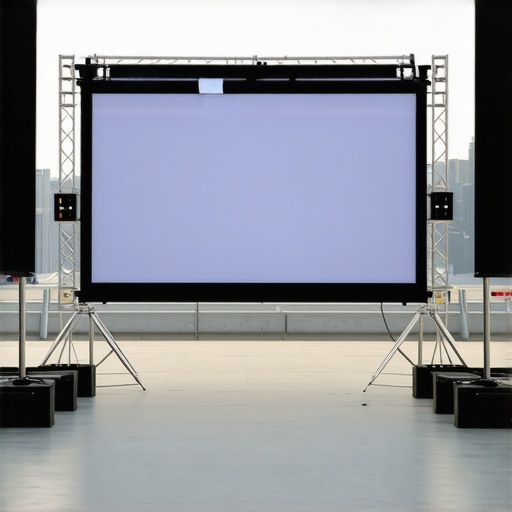
It was a gusty afternoon when my outdoor projector screen took a nosedive, knees buckling under the relentless push of the wind. That moment, I realized how fragile even the sturdiest seeming setups can be when nature throws a tantrum. If you’re like me, dreaming of crystal-clear movies under the open sky in 2026, you’ve probably faced those frustrating moments where a simple breeze turns your cinematic experience upside down. But don’t worry—I’ve uncovered some practical ways to prevent wind from ruining your outdoor screen, and today I want to share these insights with you.
Why Wind Is Your Outdoor Theater’s Worst Enemy
Outdoor screens, especially pull-down or fixed frame types, are more vulnerable than you might think. The problem is not just the gusts playing tricks with your image but also the potential for physical damage or even safety hazards. The wind can cause your screen to sway, wave, or even tear—ruining your viewing pleasure and possibly leading to costly repairs.
Early on, I made the mistake of assuming that heavy-duty frames alone would handle the wind. I was wrong. It’s easy to overlook the subtle ways wind can impact your setup if you’re not paying close attention. For example, a poorly anchored pull-down screen might seem sturdy but can whip around wildly, especially in a gusty breeze, encouraging me to explore more reliable anchoring options.
Understanding how to combat this challenge is crucial, and it involves more than just securing your screen with a few weights. As the outdoor projection community highlights, using purpose-built anchoring systems or wind-resistant fabrics can make a significant difference. In fact, some of the latest screen gain tips and technology breakthroughs can help enhance stability and image quality, even in fluctuating weather conditions.
Are you tired of your outdoor movie nights being interrupted by the wind? If so, you’re not alone. Many enthusiasts face this challenge, but with the right strategies, we can create a resilient outdoor entertainment space that withstands Mother Nature’s mood swings.
In the upcoming sections, I’ll walk you through three proven methods to anchor your outdoor screen effectively. Whether you have a pull-down or a fixed frame setup, these tips are tailored to keep your display steady and your outdoor movie nights going strong. Ready to reclaim your outdoor cinema experience? Let’s dive into the first essential step.
Anchor Your Screen Firmly in Place
Start by using heavy-duty anchors or stakes that are appropriate for your ground type—soil, grass, or concrete. For example, when I set up my pull-down screen last summer, I replaced flimsy plastic stakes with steel U-shaped ground anchors, hammered them deep into the soil. This drastically reduced sway during gusts. To tie the screen frame, attach sturdy nylon ropes or ratchet straps to these anchors, ensuring even tension around the perimeter. Think of your setup like a tent—tight, well-anchored joints resist wind better.
Upgrade to Wind-Resistant Frames and Fabrics
Use materials designed for outdoor resilience. Modern projection screens with reinforced frames and specialized fabrics are less likely to flutter or tear in strong winds. For instance, I recently installed a high-gain ALR screen that integrates a tensioned frame and a durable, matte fabric, which maintains flatness and clarity even in breezy conditions. These technological improvements, like the ones highlighted in ALR screen innovations, are vital for durability.
Implement Wind Barriers or Shields
Install physical barriers such as fences or windbreaks around your viewing area. Positioning a tall shrub or a custom-built fabric wall on the windward side can drastically reduce gusts reaching your screen. I once set up my backyard theater near a hedge, which cut the wind’s force almost in half, leading to less sway regardless of weather forecasts. For finer control, consider adjustable fabric screens that can be retracted or extended based on the wind conditions.
Optimize Screen Placement Strategically
Place your screen in a location naturally shielded from prevailing winds—behind a building, boundary wall, or natural terrain. When I moved my projector to a corner tucked behind a garage, I noticed an immediate decrease in wind-related motion artifacts. Additionally, angling your screen slightly away from the wind can prevent direct force applications. This simple repositioning can make your outdoor setup much more tolerant to gusts.
Tension and Maintenance to Prevent Waves
Regularly check and adjust the tension of your pull-down or fixed frame screens. Loose fabrics are prone to flutter and waves, which worsen in windy conditions. During a windy night, I noticed slight waviness developing on my tensioned screen; I tightened the fabric and re-secured the frame, which prevented further movement. For dedicated solutions, consider tensioning systems with turnbuckles or adjustable brackets, similar to rigging in stage arts, which let you fine-tune the flatness and resistance to wind.
Many enthusiasts assume that choosing a high-quality pull-down or ALR screen guarantees perfect images, but the truth is more nuanced. A common myth is that all screens with high gain are suitable for every space; in reality, high-gain screens can wash out in bright rooms if not chosen carefully. For example, resist the temptation to buy the highest gain screen without considering your ambient light conditions, as this can result in dull, flat images instead of vibrant, crisp visuals. Moreover, some assume that fixed frame screens are always better than pull-down options, yet adjustable tension and proper installation are far more important for image quality than the type of mechanism. An often-overlooked detail is the impact of viewing angle — high gain screens tend to narrow the viewing cone, making the image appear washed out unless positioned correctly. According to expert guidance, the magic lies in understanding your specific environment and matching screen specifications accordingly, especially considering factors like room brightness and projector lumens, which directly influence perceived brightness and contrast. Relying solely on screen gain numbers without considering these nuances is a common trap that leads to disappointing results. Additionally, many overlook the advanced coatings and fabrics that can enhance contrast and reduce glare, vital for bright-room projections. For instance, newer ALR screens with specialized micro-structures can significantly improve clarity and black levels without requiring darkened rooms.
Why Do Screen Gain and Room Conditions Interact So Critically?
This sophisticated question uncovers the dynamic between screen gain and ambient lighting — a relationship that, if misunderstood, can ruin your viewing experience. High gain screens reflect more light, boosting brightness, but at the expense of a restricted viewing angle and potential hot spots, especially in well-lit environments. Conversely, lower gain screens distribute light more evenly, offering wider viewing angles but requiring a brighter projector or darker room conditions for optimal image quality. Experts emphasize that aligning these variables is key: a mismatch can lead to washed-out images or color shifts. For detailed guidance tailored to your setup, consider consulting specific screen gain optimization tips. Remember, the goal is to maximize contrast and clarity based on your unique space and projector combination, not just chase higher gain figures. When selecting a projection screen, keep in mind that technological advances like micro-structured surfaces and anti-glare coatings can deliver high contrast artifacts and vibrant images even in challenging lighting — making your investment more future-proof. As with many home theater decisions, understanding the deeper interplay of these factors will prevent common pitfalls. Have you ever fallen into this trap? Let me know in the comments.Maintaining your outdoor projection setup over time requires a combination of the right equipment and regular care routines. I personally recommend investing in high-quality tensioning systems like adjustable turnbuckle kits, which allow you to fine-tune the flatness of your screen after exposure to environmental factors. These systems, available from specialized stage rigging suppliers, provide precision control and longevity compared to standard hardware. Additionally, a durable cleaning kit specifically designed for projection fabrics, such as micro-fiber cloths and gentle cleaning solutions, helps prevent dust and dirt build-up that can diminish image quality. Using compressed air can also be effective for removing debris from frame components and fabric surfaces without damaging the material.
For long-term protection, consider applying specialized coatings or covers during the off-season or inclement weather to shield your screen from UV rays, moisture, and temperature fluctuations. Some manufacturers produce anti-UV sprays compatible with projection fabrics, which can extend the lifespan of your investment. Regular visual inspections are crucial—check for signs of sagging, tears, or corrosion on the frame. Addressing these issues promptly prevents escalation and costly repairs.
As projection screens evolve, so do the maintenance techniques. The future likely points toward smart, self-monitoring screens embedded with sensors that alert you when tension decreases or fabric degradation begins. This integration of IoT (Internet of Things) technology, similar to developments discussed in industrial automation, could revolutionize how we care for our home theaters, making maintenance more proactive and less labor-intensive.
**How do I maintain my screen over time without compromising performance?** A practical approach is establishing a routine schedule that includes visual checks, gentle cleaning, and tension adjustments. For instance, after each outdoor event, inspect the fabric for dust and clean it with a soft microfiber cloth, following the manufacturer’s recommendations. Periodically, re-tighten tensioning elements to combat slack caused by temperature changes or moisture. Additionally, consider installing windbreaks or protective covers to mitigate environmental stressors. With diligent maintenance, your investment in a pull-down or fixed frame screen will deliver optimal performance for years.
Finally, I highly recommend exploring advanced tensioning tools like the professional setup guides to ensure precise and durable installation. Incorporating these methods and tools enhances both image quality and longevity, allowing you to enjoy a seamless cinematic experience regardless of weather conditions. Start by trying out a tensioning system upgrade—it’s a small investment for a big improvement in how your screen performs over time. Proper maintenance isn’t just about saving money; it’s about preserving your immersive entertainment environment for the long haul.
The Hardest Lesson I Learned About Outdoor Screens and Wind Resistance
One of the most valuable lessons I discovered was that even the sturdiest outdoor projection setups can fail in unexpected ways if you overlook wind preparedness. I once relied solely on heavy frames, only to see my screen sway wildly during a gusty night, risking tears and misalignments. This experience taught me that securing your setup with purpose-built anchors and considering environmental factors isn’t just smart—it’s essential for longevity and performance.
How a Small Adjustment Can Save Your Movie Night
Simple changes, like repositioning your screen into a naturally sheltered spot or adding windbreaks, can drastically reduce sway and wave artifacts. I found that creating a barrier behind my screen, such as a fence or dense shrubbery, cut down wind impact and preserved image clarity. Sometimes, a minor shift in placement makes all the difference between a crisp view and a shaky nightmare.
My Go-To Resources for Sustainable Outdoor Projection
Over the years, I’ve curated a set of tools and reading materials that have become indispensable. The screen gain optimization tips guide helped me select fabrics that perform well in bright outdoor conditions, while the comprehensive comparison of projection screen types clarified the best choices for my environment. Investing in quality anchoring systems from trusted suppliers has also proven to be a game-changer for durability and ease of setup.
Your Next Step Toward Windproof Cinema Excellence
Taking proactive steps now will ensure your outdoor projection experience isn’t cut short by weather surprises. Remember, integrating smart anchoring, environmental assessment, and quality materials transforms your setup from vulnerable to resilient. Don’t wait for the next gust—start planning and adjusting today to safeguard your cinematic enjoyment in 2026 and beyond.
No Responses