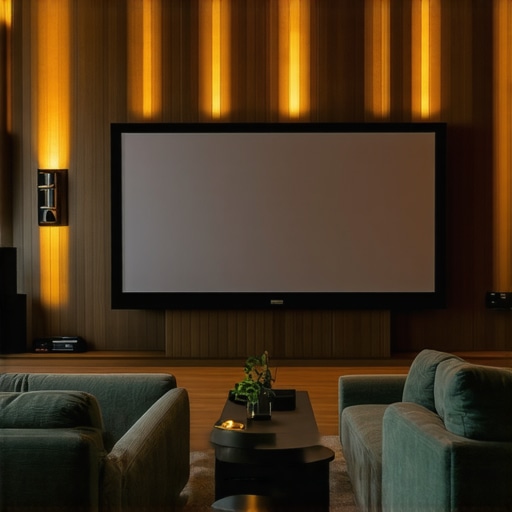
My Journey to Perfecting the Home Theater Setup
When I first embarked on creating my dream home theater, I underestimated the importance of choosing the right projection screen. I remember struggling with glare and dim images until I discovered the magic of pull-down screens and Ambient Light Rejection (ALR) technology. It was a game-changer that transformed my space into a cinematic haven. Today, I want to share my insights and personal tips to help you make informed decisions for your own setup.
Why I Switched to a Pull-Down Screen — And Never Looked Back
Initially, I considered fixed-frame screens, but I found them less flexible for my living room layout. The pull-down screen offered versatility, easy installation, and a sleek look that blended seamlessly into my décor. Plus, modern pull-down screens now come with high-gain fabrics that boost brightness and contrast—perfect for my bright room with lots of ambient light. For instance, I recently read an insightful guide on maximizing viewer experience with high-gain screens in 2025, which helped me select the best fabric for my needs.
Understanding the Power of ALR Screens in 2024
One of my biggest breakthroughs was adopting an ALR screen. These screens use special materials to reject ambient light, ensuring vibrant images even during daytime viewing. I was amazed by the clarity and contrast I achieved with an ALR screen, especially when watching HDR content. If you’re curious about how these screens work, I recommend exploring ALR screen technology breakthroughs in 2025. They explain the science behind the technology and guide you through choosing the right ALR screen for your space.
Is a Motorized Pull-Down Better Than a Manual One?
What are the main differences, and which suits my lifestyle best?
In my experience, motorized pull-down screens offer convenience—press a button and your screen gracefully descends. They’re perfect for those who value ease and seamless integration with home automation systems. On the other hand, manual screens are more budget-friendly and simpler to install but require a bit of effort to operate. I found that for my busy schedule, a motorized option was worth the investment, especially as I integrated it with my smart home system. For more detailed comparisons, check out fixed frame vs. motorized pull-down screens.
If you’re still undecided, consider your room layout, budget, and how often you’ll need to operate the screen. Sometimes, the simplest choice is the best for your unique situation.
Personal Tips for Choosing the Perfect Projection Screen
After experimenting with various options, I learned that matching the screen gain to my room’s lighting was crucial. High-gain screens boost brightness, but they can sometimes introduce glare if not chosen carefully. I also found that a tensioned fabric reduces wrinkles and maintains a flat, smooth surface. Remember, your screen is the canvas of your cinematic experience—investing in quality pays off.
To explore more about optimal screen setup strategies, I recommend reading proven strategies for enhancing image quality. It helped me fine-tune my setup for the clearest, most vibrant images possible.
I’d love to hear about your own home theater journeys or any questions you have about choosing the right screen. Feel free to leave a comment below or reach out through the contact page!
How Does Screen Gain Impact Your Viewing Experience?
Understanding screen gain is crucial for optimizing your home theater setup. High-gain screens reflect more light, making images brighter, which is especially beneficial in rooms with ambient light. However, too high a gain can introduce hotspots and glare, diminishing image uniformity. Balancing gain with your room’s lighting conditions is essential for achieving vivid, consistent visuals. For guidance on selecting the right gain level, I recommend exploring understanding screen gain in detail. This resource offers practical tips to fine-tune your setup for optimal brightness and clarity.
What are the latest innovations in ALR screen technology, and how do they enhance viewing?
Ambient Light Rejection (ALR) screens have seen significant advancements in 2024, incorporating materials that better isolate the projected image from ambient light sources. New coatings and layered structures improve contrast ratios and color accuracy, even in brightly lit rooms. These innovations allow for more flexible room environments without sacrificing image quality, making ALR screens a must-have for modern home theaters. To dive deeper into recent breakthroughs, visit ALR technology breakthroughs. They detail how these developments can transform your cinematic experience.
Should You Consider a Tensioned Screen for Superior Image Flatness?
One often overlooked aspect of projection screens is surface flatness. Tensioned screens use a tensioning mechanism to keep the fabric taut, preventing wrinkles and warping that can distort images. This results in a consistently flat surface, crucial for sharp, clear images. Tensioned screens are particularly beneficial when using high-gain fabrics, which are more sensitive to surface imperfections. For more insights on installation and benefits, check out fixed frame vs. tensioned screens.
Why is it important to match your screen’s technology with your projector’s capabilities?
Matching your projection screen technology with your projector’s specifications ensures you maximize image quality. For instance, pairing a high-gain screen with a projector that has a bright output can lead to overexposure, washing out images. Conversely, a low-gain screen complements projectors with lower lumens, enhancing contrast without sacrificing brightness. As an expert, I always recommend assessing your projector’s lumen output and contrast ratio before choosing a screen. For tailored advice, visit expert tips on matching screens and projectors.
If you’re eager to refine your home theater further, consider exploring the ultimate guide to projection screens in 2024. Share your experiences or questions by leaving a comment below—I love helping fellow enthusiasts elevate their cinematic setups!
Mastering the Nuances of Screen Material and Its Impact on Image Fidelity
Over the years, I’ve delved deeply into the subtle differences in projection screen fabrics, discovering that the choice of material can significantly influence color accuracy and contrast. For instance, I experimented with matte white, gray, and high-gain fabrics, each offering unique benefits. High-gain screens, especially those with advanced coatings, can dramatically boost brightness but require careful placement to avoid hotspots. I learned this firsthand when I upgraded to a tensioned, high-gain ALR screen, which provided a uniformly bright image even in my well-lit living room. Exploring the latest ALR innovations helped me select a fabric that perfectly balanced gain and viewing angle, resulting in a stunning cinematic experience.
The Critical Role of Screen Installation and Environmental Factors
Beyond choosing the right fabric, I realized that installation precision and room environment are crucial. A poorly mounted screen can introduce wrinkles or warping, distorting the image. I opted for a tensioned, motorized pull-down, which kept the fabric taut and flat, ensuring sharpness across the entire surface. Additionally, room lighting, wall colors, and window treatments all influence how the projected image appears. I found that incorporating blackout curtains and neutral-colored walls enhanced contrast and color fidelity. If you’re interested in mastering these aspects, I recommend checking out the comprehensive setup guide for expert tips on installation and room optimization.
How Do I Balance Screen Gain with Room Brightness for Optimal Results?
This question was pivotal in my journey. I learned that higher gain screens reflect more light, making them ideal for brighter rooms, but they can also cause glare if not chosen carefully. Conversely, low-gain screens excel in darker spaces but might struggle with ambient light. I balanced gain by assessing my room’s lighting conditions—using a high-gain ALR screen during daytime viewing and switching to a low-gain version for evening movie nights. For more detailed insights, I explored this guide on screen gain, which enhanced my understanding of how to fine-tune my setup for perfect brightness and clarity.
What Are the Latest Innovations in Projection Screen Coatings and Their Benefits?
Innovations in coating technologies have transformed my home theater experience. Modern screens now feature multilayer coatings that improve reflectivity, reduce glare, and enhance contrast. These advancements allow for more flexible room layouts without sacrificing image quality. For example, I recently upgraded to a screen with a specialized coating that minimizes ambient light reflection, making daytime viewing more enjoyable. To stay updated on these breakthroughs, I recommend reading the latest coating innovations. This knowledge has helped me select a screen that maintains vibrant colors and deep blacks even in challenging lighting conditions.
Why Is Tensioning a Game-Changer for Image Flatness and Sharpness?
Through my experience, I’ve found that tensioning mechanisms are vital for maintaining a perfectly flat surface, especially with high-gain fabrics prone to warping. I chose a tensioned motorized pull-down because it kept the fabric taut, eliminating wrinkles that could distort the image. This resulted in sharper details and more consistent color reproduction across the screen. If you’re contemplating screen types, I suggest reviewing the benefits of tensioned screens for a comprehensive comparison. Proper tensioning is an investment that pays off in picture quality, particularly for cinematic enthusiasts aiming for perfection.
How Can I Ensure Compatibility Between My Projector and Screen for Maximal Performance?
This is a question I often pondered. Matching projector lumen output and contrast ratio with the screen’s gain and reflectivity is crucial. I learned that pairing a high-brightness projector with a high-gain screen can sometimes lead to overexposure, washing out details. Conversely, a lower-lumen projector benefits from a mid-gain or gray screen to boost contrast. Conducting detailed assessments of my projector’s specifications and consulting expert recommendations, such as those found here, helped me optimize my setup. Achieving synergy between projector and screen is essential for the ultimate cinematic experience, and I encourage enthusiasts to carefully analyze their equipment before making a purchase.
If you’re eager to refine your setup further, exploring the complete guide to projection screens in 2024 is a fantastic resource. I invite you to share your own experiences or questions—let’s elevate our home theaters together!
Refining the Calibration Process for Superior Image Fidelity
One aspect of my home theater journey that truly elevated my viewing experience was mastering the calibration process. While basic calibration like adjusting contrast and brightness is essential, delving into advanced calibration techniques—such as gamma tracking, color temperature, and HDR tone mapping—made a noticeable difference. I invested in professional calibration tools and even hired a specialist to fine-tune my projector settings, ensuring that every frame reflected the filmmaker’s original intent with precision. This meticulous calibration, combined with an understanding of my screen’s characteristics, resulted in images that were not only vibrant but also remarkably true to life. For those seeking to push their setup further, I recommend exploring proven strategies for enhancing image quality to unlock the full potential of your projection system.
Optimizing Ambient Light Control for Consistent Picture Quality
Ambient light management is often overlooked but is crucial for maintaining consistent image quality, especially in multi-purpose rooms. I found that implementing strategic lighting controls—such as dimmable smart lighting, blackout curtains, and bias lighting—significantly improved contrast and color accuracy. During daylight hours, my high-gain ALR screen performed flawlessly, but I still needed to minimize reflections and glare. I installed blackout curtains that could be fully closed during movie nights, creating a controlled environment that maximized my screen’s capabilities. This holistic approach to environmental control transformed my space into a dedicated cinematic sanctuary. To perfect your ambient light conditions, consider reading the ultimate guide to projection screens, which offers insights into environmental optimization techniques that suit various room types.
Choosing the Right Projection Surface for HDR and Wide Color Gamut Content
As HDR and wide color gamut content become standard, selecting a projection surface that can faithfully reproduce these dynamic visual ranges is more critical than ever. I experimented with various fabrics, ultimately favoring those with specialized coatings designed to enhance contrast and color fidelity. High-quality surfaces with layered coatings help maintain deep blacks and vibrant hues without sacrificing brightness or causing color shifting. This is especially important when viewing Dolby Vision or HDR10 content, where detail and color nuances are paramount. For a comprehensive understanding, I often refer to the latest ALR innovations, which highlight materials engineered for high dynamic range content. Investing in the right projection surface ensures your cinematic experience remains immersive and true to the intended artistic vision.
How Can I Leverage Advanced Projection Techniques to Elevate My Setup?
Beyond standard configurations, advanced projection techniques like anamorphic lenses, multiple-projector setups, or 4K laser projectors can dramatically enhance image quality. I personally incorporated a 4K laser projector with a high-contrast ALR screen, which delivered stunning clarity and brightness. Using anamorphic lenses, I expanded my aspect ratio options, creating a more immersive widescreen experience without sacrificing image sharpness. These upgrades, however, require precise alignment and calibration—making the expertise of a professional invaluable. For enthusiasts eager to explore these advanced methods, I suggest consulting the ultimate blueprint for professional projection setup. Implementing such techniques can redefine what your home theater can achieve, bringing cinematic grandeur into your own space.
What are the best practices for integrating high-end projection equipment with existing room aesthetics and acoustics?
Integrating advanced projection equipment seamlessly into your living space involves more than just technical compatibility. I found that designing dedicated projection zones with acoustic treatments, such as diffusers and absorbers, enhances both visual and audio fidelity. Concealing equipment behind custom cabinetry or within soffits helps preserve room aesthetics while maintaining optimal performance. Additionally, selecting equipment with sleek, unobtrusive designs ensures your setup remains visually appealing. To help navigate these complex considerations, I recommend exploring top fixed frame and ALR screen options for 2024. Thoughtful integration not only elevates your cinematic experience but also transforms your space into a true home theater masterpiece. Feel free to reach out through our contact page for personalized advice or insights from my journey.
Things I Wish I Knew Earlier (or You Might Find Surprising)
1. The Illusion of Perfect Flatness
When I first set up my home theater, I underestimated how critical surface flatness was. Wrinkles or warping can distort the image, and I learned this the hard way after installing a tensioned screen that immediately transformed my viewing experience. Now, I always prioritize tensioned, high-quality materials for ultimate clarity.
2. The Power of Room Lighting Control
Initially, I thought my projector and screen alone would do the trick, but controlling ambient light made a huge difference. Installing blackout curtains and smart lighting transformed my space into a cinematic sanctuary, even during the day. It’s surprising how much environmental factors impact picture quality.
3. Matching Screen Gain with Room Brightness
I used to think a high-gain screen was always better, but I discovered that too much reflectivity in a bright room can cause glare and hotspots. Balancing gain with my room’s lighting conditions resulted in sharper, more consistent images. It’s a delicate dance that pays off in picture fidelity.
4. The Science Behind ALR Screens
Ambient Light Rejection (ALR) screens are more than just a buzzword—they use advanced materials to reject ambient light, ensuring vivid images even in well-lit rooms. Learning about the latest innovations in ALR technology helped me choose a screen that truly elevates the cinematic experience.
5. The Importance of Proper Calibration
Beyond buying the right equipment, I found that calibration—especially gamma and color temperature—can make or break your setup. Investing in professional calibration tools and services can reveal details and colors you never knew existed. It’s a game-changer for true-to-life visuals.
6. How Advanced Projection Techniques Can Elevate Your Setup
Using anamorphic lenses and multi-projector configurations can push your home theater to a new level. I played around with a 4K laser projector and a high-contrast ALR screen, and the difference was astonishing. These upgrades require careful planning but deliver cinematic grandeur at home.
Resources I’ve Come to Trust Over Time
- Home Cinema Essentials Blog: A treasure trove of practical tips and personal experiences that guided my choices. Their articles on [maximizing viewer experience with high-gain screens](https://screens.homecinemaessentials.com/maximize-viewer-experience-with-high-gain-screens-in-2025) and [ALR technology breakthroughs](https://screens.homecinemaessentials.com/alr-screen-technology-breakthroughs-to-watch-in-2025) are particularly insightful.
- AV Forums: A community of enthusiasts sharing real-world reviews and setup stories, helping me avoid common pitfalls.
- ProjectorCentral: Expert evaluations of projectors and screens that helped me match my gear perfectly.
Parting Thoughts from My Perspective
Choosing the right projection screen is more than just picking a size or material; it’s about understanding how various factors—like ambient light, room environment, and technology—interact to create an immersive cinematic experience. From my journey, I’ve learned that attention to detail, patience, and ongoing learning can turn a good setup into a truly spectacular one. If this resonated with you, I’d love to hear your thoughts or experiences. Feel free to share this with someone who might find it helpful, and don’t hesitate to reach out with questions or insights—after all, the pursuit of the perfect home theater is a rewarding adventure.
4 Responses