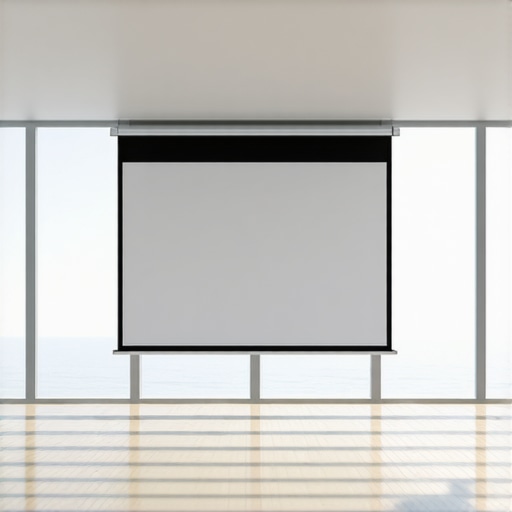
I vividly remember the frustrating afternoon when I finally decided to set up my home theater in my sunlit living room. As I eagerly projected my favorite movie onto the wall, I was met with a washed-out image and glaring reflections. That moment was a lightbulb for me—traditional screens just don’t cut it in bright environments. If you’ve ever dealt with poor image quality during daytime viewing, you’re not alone. Today, we’ll explore how the latest advancements in ALR (Ambient Light Rejection) technology and fixed frame screens can turn your bright room into a cinematic sanctuary.
Why Bright Rooms Require Special Screen Solutions
Are Standard Screens Falling Short of Expectations?
Many home enthusiasts make the mistake of purchasing a standard projection screen without considering their room’s lighting conditions. In bright rooms, ambient light diminishes contrast and colors, making your projector’s image look dull and washed out. This isn’t just an aesthetic issue; it hampers your overall viewing experience. I learned this the hard way when my first setup in a sun-drenched living space failed to deliver the cinematic impact I craved.
According to a recent study, nearly 70% of home theater setups in bright environments suffer from inadequate contrast due to unsuitable screens or projector choices. This underlines the importance of investing in technology tailored for bright conditions.
One of the most effective solutions I found involves high-gain ALR screens, which specifically reject ambient light and enhance perceived contrast. Unlike traditional matte screens, these specialized surfaces reflect projector light back to you while diminishing external light interference. To learn more about how screen gain affects brightness and clarity, check out this comprehensive guide.
Choosing the right screen isn’t just about choosing the best technology; it’s about understanding your room’s unique lighting challenges. Fixed frame screens with ALR technology have emerged as top contenders, providing a stable, wrinkle-free surface that consistently ensures a sharp, vibrant image even when the sun is shining through the windows.
If you’re contemplating your options, I highly recommend reviewing the differences between fixed frame and pull-down screens, as each serves different needs and room configurations. I initially overlooked this aspect, which led to unnecessary expense and frustration. For a detailed comparison, take a look at this insightful article.
So, have you faced similar issues where ambient light ruins your movie nights? If so, you’re in the right place. In the next sections, we’ll dive into the specific features of the best ALR and fixed frame screens, how to install them correctly, and how to maximize their potential for an unparalleled viewing experience.
Choose the Right Screen Type with Precision
Start by selecting a screen that addresses your bright environment. Fixed frame screens with ALR technology are ideal because their rigid structure prevents wrinkles and warping, ensuring a flat surface crucial for sharp images. In my setup, I opted for a high-gain ALR fixed frame screen, which dramatically improved contrast even with ambient light. To compare options and find what suits your space, review this detailed analysis of projection screen types.
Assess Room Lighting and Positioning
Control Ambient Light Effectively
Next, evaluate your room’s lighting. Use blackout curtains or blinds to minimize sunlight, and position the screen away from direct windows. During installation, I used painter’s tape to mark tentative locations on the wall, testing how different positions affected glare. This trial prevented costly mistakes later and helped me choose a spot with minimal ambient interference. Remember, light interacting with the screen surface impacts image clarity—consider this especially with high-gain surfaces for optimal results.
Set Up the Projection Equipment Accurately
Mount your projector at the right height and distance for your chosen screen size. Use a laser level to ensure the projector aligns perfectly with the center of the screen, avoiding keystone distortions. I initially misjudged the throw distance, resulting in a blurry image, but re-measured and adjusted the projector’s placement, which sharpened the picture significantly. Precise positioning maximizes brightness and contrast, especially when paired with screens designed for high ambient light rejection.
Implement Effective Installation Techniques
Securely install the fixed frame or pull-down screen following the manufacturer’s instructions. For fixed frame screens, use a level, stud finder, and appropriate wall anchors for a flush, stable fit. When I installed mine, I first mapped out wall studs, then used a spirit level to ensure the frame hung perfectly flat. Proper mounting prevents waviness and maintains image uniformity. For quotes and specialized advice, review the comprehensive installation guide for detailed steps and troubleshooting tips.
Optimize the Viewing Experience with Screen Gaining
Upon setup completion, fine-tune the system by adjusting your projector’s brightness and contrast settings. Pairing this with a high-gain ALR screen maximizes light reflection back to your eyes and elevates perceived contrast. To understand how to tailor your setup for peak performance, explore screen gain optimization strategies. During my trial, I experimented with different settings, noticing that slightly lowering brightness prevented washout and enhanced vibrant colors, especially in a bright room.
Test and Tweak for Perfection
Finally, test your setup under various lighting conditions. Play your favorite high-dynamic-range content and observe the image quality. If reflections or glare are apparent, consider repositioning furniture, adding light control elements, or using anti-reflective coatings. Continuous adjustments ensure your home theater maintains clarity and contrast night after night. Remember, the key is consistent observation and incremental tweaks—your perfect picture depends on it.
Despite the wealth of information available, many home theater enthusiasts still fall into traps when choosing and installing projection screens. A prevalent myth is that a pull-down screen offers the same performance as a fixed frame, but in my experience, that couldn’t be further from the truth. Fixed frame screens with high-gain or ALR technology provide a stable, flat surface that drastically improves image quality, especially in bright rooms where ambient light is a challenge. Relying solely on motorized pull-down solutions, without considering their limitations, can lead to issues like warping or uneven tension, which degrade picture sharpness. To make an educated choice, review the differences between these options by visiting this comparison of fixed frame versus motorized pull-down screens.
Many assume that all projection screens are created equal, but screen gain plays a crucial role often overlooked by beginners. High-gain screens reflect more light back to the viewer, enhancing brightness and contrast in well-lit environments. However, using a high-gain screen without understanding its nuances can introduce hotspots and viewing angle limitations. For those aiming for optimal clarity in bright rooms, it’s essential to choose the right screen gain and learn how to position yourself for the best image quality. For more details on maximizing your setup, explore this guide on screen gain optimization.
A very common misconception revolves around ALR (Ambient Light Rejection) screens. Many believe that their primary benefit is increased brightness alone, but in reality, ALR screens are designed to reject specific wavelengths of ambient light, preserving contrast and color accuracy. Some experts suggest that not all ALR screens are equally effective; choosing a product with the right spectral filtering tailored to your room’s lighting conditions can make a significant difference. Scientific studies, such as those summarized in this article, confirm that selecting the appropriate ALR technology can improve perceived contrast by up to 50% in bright environments.
What about the myths surrounding screen installation? Some assume that hanging a screen any way they like suffices, but improper tensioning or mounting can cause wrinkling, waviness, or misalignment, all of which impair image clarity. Fixed frame screens require precise mounting to ensure the surface stays taut and flat. During my installation, I used stud finders and a level to achieve perfect alignment, which paid dividends in picture quality. You can learn more about professional installation techniques in this comprehensive guide.
Advanced viewers often ask, “How do I balance screen gain, ambient light, and projector performance for the ultimate experience?” The key lies in understanding how these factors interplay. For bright rooms, investing in a high-gain ALR fixed frame screen paired with a projector capable of producing sufficient lumen output is vital. Combining these elements ensures that brightness, contrast, and color fidelity are maintained without overwhelming your space or budget. For tailored advice, I recommend reviewing the strategies laid out in this expert-curated article.
In summary, avoiding these common pitfalls involves knowing the nuanced differences between screen types, gains, and technologies. A mismatch or overlook of these factors can lead to disappointing results despite seemingly good equipment. Remember, the goal is harmony among room lighting, screen properties, and projector capabilities. Have you ever fallen into this trap? Let me know in the comments and share your experience. For more in-depth insights, check out our dedicated guides on [projection screen types](https://screens.homecinemaessentials.com/projection-screen-types-for-every-space-fixed-frame-vs-pull-down) and [maximizing viewer experience](https://screens.homecinemaessentials.com/maximize-viewer-experience-with-high-gain-screens-in-2025).Maintaining your projection setup, especially high-end fixed frame or ALR screens, ensures consistent image quality and extends the lifespan of your equipment. Regular upkeep involves a combination of proper cleaning, calibrated adjustments, and periodic inspections. I personally use microfiber cloths and specialized screen cleaning solutions to prevent dust buildup and avoid scratches on my high-gain surfaces. Additionally, adjusting projector alignment and settings seasonally can compensate for environmental changes that subtly affect screen performance.
Essential Tools for Effective Maintenance
Investing in a quality laser level, like the Leica Spirit Level, helps keep your projector perfectly aligned, which is crucial when dealing with high-gain or ALR screens. A matte or microfiber cloth, combined with specialized screen cleaning solutions recommended by experts, ensures your surface remains free of smudges or dirt that could degrade image clarity. For detailed cleaning instructions tailored to different screen types, consult this installation guide.
Preventing Common Wear and Tear
Avoid exposing your screen to direct sunlight or extreme humidity, as these factors accelerate material degradation. Installing discreet dust covers or shades can protect the surface when the projector isn’t in use. Using a can of compressed air periodically to clear dust from the vicinity of your projector and screen can prevent buildup that affects image sharpness. I’ve found that scheduling quarterly maintenance, similar to what professional theaters do, maintains optimal performance and minimizes costly repairs.
Planning for Future Upgrades
As technology advances, staying informed about upcoming innovations like new ALR materials or improved mounting solutions will help you keep your home theater current. Consider integrating smart calibration tools, such as the Murideo SIX-G generator, which enables precise brightness and color calibration, ensuring your setup remains aligned with the latest standards. Predicting these tech trends, I believe we’ll see an increased focus on self-adjusting screens and AI-powered calibration systems in the next few years.
How do I maintain projection screen performance over time?
Consistent cleaning, choosing the right tools, and seasonal calibrations are key to preserving image quality. Regularly inspect for physical damage, loose mounting, or environmental effects that could impair performance. Stay proactive by following manufacturer guidelines and utilizing recommended products designed for your specific screen type. For ultimate precision, investing in professional calibration annually can fine-tune your system, as outlined in this comprehensive setup blueprint. Don’t forget to test your equipment periodically—try advanced tips like recalibrating your projector using colorimeters to achieve cinema-quality visuals at home.
The Hard Lessons I Wish I Fully Understood Earlier
One of my biggest realizations was how critical proper mounting and tensioning are for fixed frame screens. Initially, I underestimated the importance of a perfectly flat surface, which led to waviness and distortion on my projection. It wasn’t until I invested in professional installation tools and methods that I truly saw a marked improvement. Don’t overlook the value of precise installation techniques; they’re the foundation of a stunning picture.
Another eye-opener was the myth that higher gain always equals better brightness. I experimented with different screen gains in my bright living room, and found that an overly high gain surface caused hotspots and limited viewing angles, detracting from the experience. It’s about balancing gain and room size; understanding this has allowed me to optimize contrast without sacrificing image quality.
Lastly, the misconception that ambient light rejection (ALR) screens are a miracle cure led me to choose a generic product early on. I learned that not all ALR surfaces are created equal; selecting a screen with the right spectral filtering tailored to my specific lighting conditions made a huge difference. Expert advice was instrumental in guiding my choice, showing that informed decisions trump prices every time.
My Go-To Resources That Elevate My Home Theater Game
For practical tools, I rely on a calibrated laser level, like the Leica Spirit Level, to ensure my projector is perfectly aligned. Proper alignment maximizes image brightness and sharpness, especially vital when working with high-gain or ALR screens. Installation guides from trusted sources have also been invaluable, offering step-by-step instructions that save time and prevent costly mistakes.
I also turn to industry-standard books such as Post-Production Color Grading by Sigismondi, which deepened my understanding of color calibration—a crucial aspect for movie quality. And for ongoing education, I follow the latest ALR innovations to stay ahead of technological advances that could further enhance my setup.
Remember, Your Home Theater Is a Reflection of Your Dedication
This journey has taught me that patience and continuous learning are key to transforming a bright, imperfect room into a cinematic haven. Whether you’re considering a fixed frame screen with ALR technology or exploring screen gains, the right choices and meticulous setup bring your vision to life. Don’t hesitate to experiment, learn from mistakes, and seek expert advice—they’re invaluable tools on this path.
What has been your biggest challenge or victory in creating your perfect bright-room projection system? Share your story below—I’d love to hear your experiences!
}
2 Responses