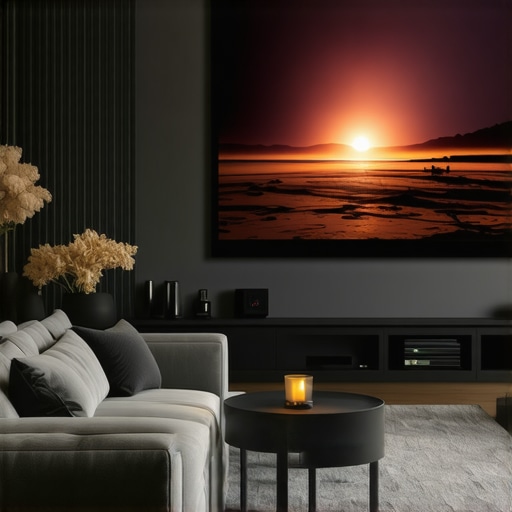
I remember the exact moment I realized my home theater was missing something crucial. I was settled in, eager for an epic movie night, only to be greeted by washed-out images and a dull screen that refused to deliver the vibrant, crisp picture I was craving. Frustration crept in as I scrambled to troubleshoot, only to discover I had overlooked a vital component: the right projection screen technology for my space. That lightbulb moment sparked my journey into discovering what truly makes a difference—especially in bright rooms or well-lit environments where traditional screens fall flat.
Why settling for less isn’t an option anymore
Every home theater enthusiast knows that the screen is the heart of your visual experience. Yet, many of us have been tempted by cheaper fixed frame screens or generic pull-down options that promise ease but deliver mediocrity. It wasn’t until I dove into the latest advancements in ambient light rejecting (ALR) screens and high gain pull-down solutions that I realized the potential to elevate my setup. In 2024, the technology has evolved so dramatically that choosing the right screen can transform your space from blah to breathtaking. If you’ve ever struggled with poor brightness, washed-out colors, or glare issues in your room, you’re not alone. These problems persist because most screens aren’t optimized for bright environments or large spaces. Luckily, there’s good news—modern ALR and pull-down projection screens are designed precisely to combat these challenges, making your viewing experience richer, clearer, and more vibrant than ever before.
Feeling skeptical about the hype? You’re not the only one
When I first heard about high-gain ALR screens, I thought it sounded too good to be true. I made a costly mistake early on—thinking that any screen with a high gain would do the trick. Turns out, that’s not the case. That mistake cost me time and money, and worse, it delayed truly enjoying my home theater. The truth is, not all high-gain screens are created equal. The real game-changer is understanding the right technology for your space and how to set it up properly. For freelance experts’ insights, check out our detailed guide on how to select the best ALR screen. Now, I want to help you avoid the pitfalls I encountered and show you exactly what to look for in 2024 to make your investment worthwhile.
So, are you tired of struggling with screens that don’t deliver in bright rooms? Ready to finally bring professional-grade quality into your home? Stay with me, because I’ll share proven strategies to select, set up, and optimize your projection screen. Let’s turn your viewing frustrations into awe-inspiring moments that will keep everyone talking about your home theater for years to come.
**
Selecting the Right Screen Type
Begin by defining your room’s lighting conditions. For bright environments, a fixed frame screen with ambient light rejecting (ALR) technology provides better contrast and color accuracy. Think of it like sunglasses for your projector—blocking out ambient glare to reveal vivid images. I once bypassed this step, installing a standard fixed screen in my sunlit living room, only to be disappointed with washed-out visuals. Upgrading to an ALR fixed frame transformed my viewing experience within hours.
Evaluating Screen Gain Effectively
Know your brightness needs
Screen gain indicates how much light the screen reflects. A higher gain (1.8–2.0) reflects more light, making images brighter, especially beneficial in rooms with ambient light. However, high gain can introduce hot-spotting—bright centers and dim edges—like a spotlight. In my setup, I tested different gain levels with a simple light meter app, finding that a 1.8 gain hit the sweet spot for my setup, maximizing brightness without uneven illumination. For precise gain understanding, explore this guide.
Choosing Between Fixed Frame and Pull-Down
Both styles serve distinct needs. Fixed frame screens are rigid, offering flatness and precision ideal for permanent setups. Pull-down screens are more versatile; they can retract when not in use, saving space. I experimented with both—initially mounting a pull-down in my room, but I noticed slight waviness when retracted from dust or humidity. Ultimately, I opted for a fixed frame for stability and image quality, following this comparison.
Setting Up for Bright Illumination
Installation height and angle matter. Mount the screen slightly below eye level, angled to reflect light directly to viewers’ eyes, not ambient light sources. Use precise measurements—measure your seating area and projection distance meticulously. I once installed my screen 10 inches too high, resulting in curved images and glare issues. Utilizing a laser level and referring to this installation guide helped me achieve perfect flatness and optimal viewing angles.
Fine-Tuning for Optimal Clarity
Post-installation, calibrate your projector for brightness, contrast, and sharpness. Adjust color settings to match your room’s lighting; a warmer tone reduces glare. Take time, checking images with different content—movies, sports, gaming—to ensure consistent quality. I found that small adjustments made a big difference, especially when viewing high-gain screens in bright rooms, where overcompensation can cause image washing. For detailed calibration techniques, explore this resource.
Document Your Setup
Create a checklist of your measurements, adjustments, and components. Photograph your installation to reference for future tweaks. This helps maintain consistency and troubleshoot issues promptly. I kept a detailed log over my first year—note that small changes, like cleaning or repositioning, can impact image sharpness or brightness, especially with high-gain screens. Regular maintenance and checkups ensure sustained performance.
Leverage Expert Insights
If uncertainties arise, consulting specialists ensures you get the optimal setup. Visit this expert guide for tips on selecting and installing the best projection screen solutions tailored to your environment. Precise execution of these steps ensures a stunning, vibrant home theater even in challenging bright rooms, making every movie a cinematic experience.Many home theater enthusiasts believe that selecting a fixed frame screen or pull-down model is straightforward—just pick the size and gain and you’re set. However, this oversimplification often leads to subpar results. One common misconception is that higher screen gain always equals better brightness; in reality, too high a gain can cause hot-spotting, reducing overall image uniformity. Additionally, many assume that all ALR screens are equally effective—yet, nuances in optical coating and surface design determine how well they reject ambient light and preserve color accuracy. For example, some ALR screens are optimized for specific projector types or room lighting conditions, and neglecting this can negate their benefits. An advanced pitfall to avoid is the belief that fixed frame screens are inherently superior to pull-down options for permanent installations—while fixed frames tend to offer flatness, poorly mounted pull-downs can be just as stable if installed using proper techniques, like those detailed in this comprehensive guide. Moreover, understanding the interaction between projector lumens, screen gain, and ambient lighting is critical for achieving optimal image quality. For instance, a high-gain screen paired with an underpowered projector can result in an image that appears overly bright in some areas but washed out in others. These nuances emphasize the importance of a holistic approach—considering not just individual components but their interplay—when designing a home theater setup. Mastering these subtleties distinguishes a good setup from a truly professional-grade experience. Want to dive deeper? Explore this expert resource for advanced insights or visit our contact page for personalized advice. Have you ever fallen into this trap? Let me know in the comments.
Keep Your Projection Screen Performing Its Best
Investing in the right projection screen is just the beginning; maintaining its optimal performance over time is equally critical. Regular cleaning is essential—use a microfiber cloth to gently remove dust and smudges without scratching the surface. Avoid harsh chemicals; instead, opt for a mild detergent solution or manufacturer-recommended cleaning products to preserve the optical coating, especially on advanced ALR screens. I personally recommend keeping a dedicated microfiber cloth and a can of compressed air in your toolkit to manage dust buildup in hard-to-reach corners of the screen frame.
Tools That Make Maintenance Easier
For precise calibration and long-term picture quality, I use a color calibration tool like the X-Rite i1Display Pro. It helps me regularly check and adjust my projector’s color profiles, ensuring consistent accuracy. Additionally, a visual consistency check by playing standard test patterns can reveal uneven lighting, hot-spotting, or fading, allowing for timely adjustments. Using software such as CalMAN or Portrait Displays’ SpyderX can automate this calibration process and extend your screen’s lifespan while preserving image quality.
Planning for the Future of Your Setup
As technology advances, so do your options for scaling or upgrading. Modular components, such as high-quality motorized pull-down screens with durable surfaces, make it easier to upgrade without replacing the entire setup. Keep an eye on emerging innovations like higher-gain ALR materials or adaptive surfaces that respond to ambient light changes—these could become game changers. In fact, recent breakthroughs in ALR screen coatings aim to increase durability and light rejection in changing conditions, as detailed in this article.
How do I maintain my projection setup over time?
Establishing a routine of regular cleaning, calibration, and inspection is vital. Schedule monthly checks with your calibration tools and clean your screen at least quarterly to prevent dust and grime buildup. Protect your investment by ensuring your projector’s filters are clean and that the ventilation remains unobstructed. Also, keep firmware and software up-to-date, as manufacturers often release updates that optimize performance or fix bugs. Over time, small adjustments can sustain the brilliance of your picture, preventing degradation and ensuring your home theater remains a cinematic sanctuary for years to come.
For detailed guidance on calibration, I recommend reviewing this comprehensive guide. Remember, consistent maintenance is your best tool for long-term success—trust me, your future self will thank you for the effort!
Lastly, consider consulting with professionals regularly. They can fine-tune your setup and advise on upgrades like advanced ALR materials or new projector models that maximize your existing screen’s capabilities. For personalized assistance, visit our contact page.
The Hard Truths About Fixed Frame and Pull-Down Screens That No One Tells You
One of the most eye-opening lessons I learned was that bigger isn’t always better—especially when it comes to screen gain. I once thought that splurging on the highest-gain ALR screen would instantly transform my bright room into a cinematic marvel, but the result was a spotlight effect that distracted more than it delighted. It taught me that understanding the nuanced relationship between gain, projector brightness, and room lighting is crucial for achieving harmony. Additionally, I realized that even the most advanced screen technology can fall short if installed without proper calibration—something I learned the hard way after struggling with uneven images and glare. Now, I always emphasize precise setup and regular calibration, knowing these steps truly unlock the potential of your projection system.
My Must-Have Tools and Resources for a Stunning Home Theater Experience
Over time, I’ve come to rely on a handful of tools that keep my setup performing at its best. A color calibration device like the X-Rite i1Display Pro has been invaluable for fine-tuning projector color profiles, ensuring vivid and accurate images. For maintenance, a microfiber cloth and compressed air kit help me keep the screen dust-free and pristine. When exploring new screen options or upgrades, I trust guides like this comprehensive comparison for their balanced and in-depth insights. And for ongoing learning, I tune into expert articles at this resource to stay ahead of the latest advancements. These resources help me make informed decisions, ensuring my home theater remains a source of joy and inspiration.
Take the Leap: Elevate Your Viewing Game Today
Whether you’re just starting out or looking to refine your home theater, remember that mastering projection screen choices is a vital step toward immersive entertainment. The future is bright—literally—when you embrace the right technology and approach setup with patience and curiosity. Don’t wait for perfection to come to you; take small, inspired actions today that bring you closer to the cinematic experience you deserve. Explore new options, calibrate your system, and share your progress with fellow enthusiasts—you might just inspire someone else to take that leap. Ready to redefine your home theater adventure? Your perfect projection setup awaits, and I encourage you to start turning these insights into action now. Have you ever faced a challenge that made you rethink your setup? Drop a comment below—I’d love to hear your story.
2 Responses