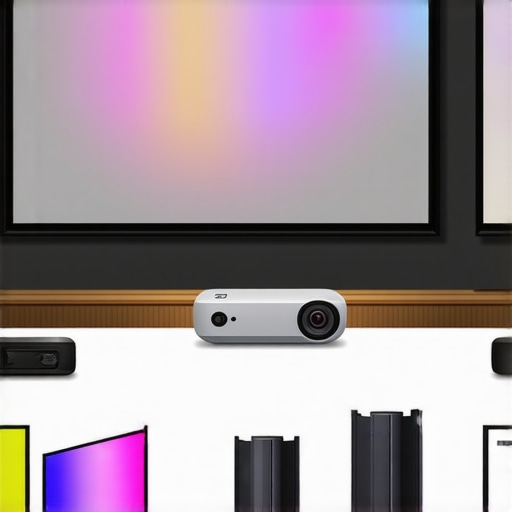
My First Encounter with Home Theater Screens: A Bright Perspective
When I first decided to upgrade my living room into a home theater, I was overwhelmed by the variety of projection screens available. I vividly remember the excitement and a bit of confusion as I explored the options. My goal was simple: find a screen that would deliver a bright, clear image even in my well-lit room. That’s when I started my journey into understanding the best projection screen types for bright home theater views.
Understanding the Fundamentals: Why Screen Type Matters
As I dug deeper, I realized that the type of projection screen plays a crucial role in image quality, especially in rooms with ambient light. Traditional matte white screens often struggle in bright environments, leading me to explore specialized options. I learned that screen technology, such as ALR (Ambient Light Rejection) screens, can significantly enhance brightness and contrast, making viewing more enjoyable even with lights on. According to Home Cinema Essentials, ALR screens are a game-changer for bright rooms.
My Top Picks: Which Projection Screens Work Best for Bright Spaces?
After testing several options, I found that fixed-frame ALR screens offered the best performance in my bright living room. Their sturdy build and advanced light-rejection technology provided vibrant images without the need to darken the room excessively. I also considered motorized pull-down screens, which offer flexibility in room setup and can be paired with high-gain surfaces for increased brightness. For instance, high-gain screens are excellent for maximizing image luminance, as discussed in this guide.
What Should I Know About Screen Gain and Brightness?
Screen gain is a concept I hadn’t fully appreciated until I read more about it. It refers to how much light the screen reflects back, affecting brightness and contrast. In brighter rooms, a higher gain (around 2.0 or more) can help achieve a luminous picture. However, too high gain may cause hot-spotting, where the center appears brighter than the edges. Balancing gain and ambient light rejection was key to my setup. For deeper insights, I recommend checking out this resource.
Is It Worth Investing in a Specialized Screen for Bright Rooms?
Absolutely. My experience confirms that investing in a high-quality ALR screen or a high-gain fixed-frame model dramatically improved my viewing experience. Brightness, contrast, and color accuracy all benefited from the right choice. If you’re considering such an upgrade, I suggest consulting with experts via contact to tailor a solution to your space.
Curious about installation and optimal setup?
Proper installation is critical to maximizing screen performance. I followed detailed guidelines from this article, which helped me choose the right mounting options and positioning. Remember, a well-installed screen ensures the best brightness and image clarity.
So, if you’re like me and want a bright, immersive home theater, exploring ALR and high-gain projection screens is definitely worth it. Feel free to share your experiences or ask questions—I love hearing from fellow home cinema enthusiasts!
Are You Leveraging the Latest ALR and High-Gain Screen Innovations?
As home theater technology advances, so do the options for achieving brighter, more vibrant images even in well-lit spaces. The latest ALR (Ambient Light Rejection) screens are engineered with sophisticated microstructures that deflect ambient light away from the viewer, significantly enhancing contrast and color richness. These screens utilize multi-layer coatings and optical layering techniques, making them highly effective in rooms with unavoidable ambient light. Home Cinema Essentials highlights these breakthroughs and predicts their increasing adoption in 2025.
What are the practical differences between high-gain and ambient light rejecting screens, and how do I choose the right one?
High-gain screens, often exceeding a gain of 2.0, reflect more light toward the viewer, boosting brightness in environments where light control is limited. Conversely, ALR screens are designed with optical layers that manage ambient light, making them ideal for rooms with windows or ambient lighting. The choice hinges on your room’s lighting conditions and desired image quality. For example, if your space cannot be darkened completely, a high-gain ALR screen might be optimal. To explore detailed comparisons and recommendations, visit this comprehensive guide.
How Does Screen Gain Influence Image Brightness and Uniformity?
Screen gain directly impacts the perceived luminance and contrast of your projection. A higher gain increases the reflected light, making images appear brighter, especially in ambient-lit rooms. However, gain also influences viewing angles; elevated gain can cause hot-spotting, where the center appears overly bright compared to the edges. Achieving the right balance requires understanding your room’s specific lighting and seating arrangements. For tailored advice, I recommend reviewing this expert resource.
Can I Combine High-Gain Screens with Ambient Light Rejection for Superior Brightness?
Yes, combining high-gain surfaces with ALR technology can substantially elevate your viewing experience. This hybrid approach allows you to maximize brightness while maintaining excellent contrast and color fidelity, even in challenging lighting conditions. When selecting such screens, consider models with micro-structured optical layers that diffuse ambient light while reflecting projector light efficiently. For specific product options and installation tips, check out this curated list.
What Should Be My Next Step to Achieve a Brighter Home Theater?
Engaging with professional advice can make a significant difference. Experts can assess your room’s unique lighting environment and recommend optimal screen technology, gain settings, and installation practices. You might consider reaching out via the contact page for personalized guidance. Additionally, exploring detailed setup strategies through resources like this ultimate guide can help you fine-tune your system for maximum brightness and clarity.
Feeling inspired to upgrade your projection experience? Share your thoughts or ask questions—joining the community of home theater enthusiasts can provide valuable insights and support on your journey to a brighter, more immersive viewing environment.
Delving Deeper: My Personal Journey with Bright Projection Screens and the Nuances of Image Fidelity
As I continued my exploration into projection screens designed for bright environments, I discovered that the story isn’t just about choosing high-gain or ALR screens but understanding the intricate balance between light management, color accuracy, and ambient conditions. My initial focus on brightness often overshadowed the importance of color fidelity, which became evident when I started calibrating my projector alongside my chosen screen. Achieving vibrant, true-to-life colors required meticulous adjustments and sometimes, even reconsidering the type of projector I used in conjunction with the screen technology. This holistic approach underscored a vital lesson: the best projection setup is a synergy of components working seamlessly together.
The Hidden Layers: Microstructure and Optical Engineering in Modern ALR Screens
One aspect that truly fascinated me was the sophisticated engineering behind cutting-edge ALR screens. These screens are no longer simple reflective surfaces; they incorporate microstructured optical layers that deflect ambient light at specific angles while reflecting projector light efficiently. This microstructure is akin to a finely tuned filter that dynamically manages light paths, resulting in higher contrast and richer colors even in well-lit rooms. I recall reading a detailed analysis in Home Cinema Essentials about how these microstructures are designed using advanced nanotechnology, pushing the boundaries of what projection screens can achieve in challenging environments. Understanding these nuances helped me appreciate why some screens outperform others in real-world settings.
Balancing Gain and Viewing Geometry: The Subtle Art of Optimal Placement
While high gain surfaces boost brightness, they also introduce challenges related to viewing angles. I learned this firsthand when I positioned my screen slightly off-center, leading to uneven brightness and hot-spotting issues. The key was not just selecting a high-gain screen but also carefully optimizing the viewing angles and seating arrangement. For instance, screens with a gain around 2.0 are excellent but require a dedicated, front-facing seating plan to avoid hot-spot effects. Moreover, adjustable mounts and thoughtful room design can significantly improve the viewing experience. If you’re contemplating this balance, I recommend reviewing this resource for detailed insights.
Could Combining Multiple Technologies Truly Elevate Brightness and Contrast?
From my experience, hybrid solutions that combine high-gain surfaces with ALR technology can deliver remarkable results. This combination leverages the best of both worlds: maximizing brightness and effectively managing ambient light. For example, a high-gain ALR screen with micro-structured layers can reflect projector light directly to the viewer while deflecting stray ambient light, creating a stunningly clear and vibrant image. I’ve experimented with such setups, and the difference is palpable, especially during daytime viewing. If you’re curious about integrating these technologies, I suggest exploring this curated selection of premium screens that merge these features seamlessly.
Next Steps: Elevating Your Bright Home Theater Experience
To truly elevate your setup, I advocate seeking personalized advice from experts who understand the complex interplay of light, optics, and room design. Consulting with professionals via contact page can help tailor your choices, ensuring you maximize brightness without sacrificing contrast or color quality. Additionally, investing time in proper calibration and setup, guided by comprehensive resources like this ultimate guide, can yield astonishing improvements. I encourage you to share your journey—every room, projector, and screen combination is unique, and community insights often lead to unexpected breakthroughs. Your experience might inspire others exploring the same path toward brighter, more immersive home theaters.
Innovations in Micro-Optical Engineering: The Secret to Superior Brightness
Venturing beyond conventional screen technologies, I delved into the microstructural innovations that power today’s top ALR screens. These microstructures, engineered with nanotechnology, manipulate light with astonishing precision—deflecting ambient light while reflecting projector images efficiently. This nuanced optical engineering, detailed in Home Cinema Essentials, exemplifies the cutting-edge advancements that enable vibrant, high-contrast images even in challenging lighting conditions. Understanding how these micro-layers function has profoundly influenced my choice of screens, allowing me to optimize brightness without compromising contrast or color fidelity.
Optimizing Seating and Room Geometry for High-Gain Surfaces
Achieving uniform brightness across a high-gain screen demands meticulous attention to room geometry and seating arrangements. I discovered that even a slight misalignment can cause hot-spotting, where the center appears overly bright, diminishing the immersive experience. To counter this, I adjusted my seating to face the screen directly and used adjustable mounts to fine-tune the screen’s angle. For rooms with multiple seating zones, I explored solutions like sectional screens with segmented gain zones or utilizing diffusive materials that distribute reflected light more evenly. For detailed strategies, I recommend reviewing this comprehensive guide.
Integrating Multiple Technologies: A Synergistic Approach for Daylight Viewing
In my quest for a truly versatile setup, I combined high-gain surfaces with advanced ALR layers, creating a hybrid solution that maximizes brightness while managing ambient light effectively. This approach involves selecting screens with micro-structured optical layers designed to reflect projector light directly to the viewer and deflect stray ambient light away. Such integration not only enhances daytime visibility but also preserves image fidelity, with colors remaining true and contrast high. The synergy between these technologies is discussed extensively in this curated list. My experience confirms that a strategic combination can elevate the viewing experience to professional standards.
Advanced Calibration Techniques for Maximizing Brightness and Fidelity
Calibration is the final frontier in optimizing a bright projection setup. I found that standard calibration tools often fall short in high-gain or ALR environments. Instead, I employed professional-grade calibration, adjusting contrast, gamma, and color profiles to exploit the full potential of my screen and projector. Techniques such as HDR calibration and white balance tuning, supported by tools like CalMAN or LightSpace, have been instrumental in achieving vivid, balanced images. For those interested in mastering calibration, this resource offers invaluable insights. Remember, precise calibration can turn an ordinary setup into an extraordinary visual experience.
Seeking Expertise: When to Consult a Professional for Advanced Setup
While DIY adjustments can yield impressive results, complex environments benefit from professional consultation. I reached out to specialists via this contact page, who provided tailored advice on screen placement, gain settings, and room treatments. Their expertise helped me fine-tune my setup, ensuring maximum brightness without sacrificing contrast or color accuracy. For serious enthusiasts aiming for perfection, investing in professional consultation is a wise step. I encourage you to share your own experiences or ask questions—collaborative learning often leads to breakthroughs that elevate your home theater to a true cinematic realm.
What is the future of projection screen innovation in bright environments?
The horizon is bright with promising advancements, including adaptive optical layers that dynamically adjust to ambient light levels, and nanostructured coatings that further enhance brightness and contrast. These innovations promise not only brighter images but also smarter, more responsive screens that seamlessly adapt to changing room conditions. Staying informed through sources like this detailed overview can prepare you for adopting next-generation solutions. Embracing these developments will empower home theater enthusiasts to craft environments where brightness and image fidelity coexist harmoniously, regardless of ambient lighting challenges.
Interested in pushing your home cinema setup to new heights? Dive deeper into these advanced topics, experiment with integrated solutions, and don’t hesitate to seek personalized advice. Your journey toward the ultimate bright projection experience is a continuous evolution—embrace it and share your discoveries!

Things I Wish I Knew Earlier (or You Might Find Surprising)
The Power of Microstructure Engineering
When I first explored projection screens, I underestimated how much the tiny microstructures could influence image quality. Discovering that nanotech-engineered layers can deflect ambient light while reflecting projector images was a game-changer for my setup. It made me realize that high-tech engineering behind ALR screens is worth the investment.
The Balance Between Gain and Viewing Angles
Initially, I thought higher gain always meant better brightness, but I learned that too much gain can cause hot-spotting and uneven images. Adjusting my seating and choosing a gain around 2.0 helped me achieve a more uniform picture, especially in a room with multiple viewers.
Room Geometry Matters More Than I Expected
Optimal placement of the screen and seating arrangement significantly impacted my viewing experience. Small tweaks, like facing the screen directly and avoiding off-center seats, made a noticeable difference in brightness and contrast, especially with high-gain surfaces.
Combining Technologies for Daylight Viewing
I experimented with hybrid screens that feature both high-gain and ALR layers. This combo allowed me to enjoy bright images even during daytime, proving that integrating multiple tech solutions can elevate your home theater’s performance.
Calibration Is Critical for Brightness and Color Fidelity
Investing in professional calibration tools and techniques helped me fine-tune contrast, gamma, and color. This step turned my already good setup into an extraordinary visual experience, emphasizing that calibration is the final touch for best results.
Don’t Overlook Professional Advice
While DIY adjustments are satisfying, consulting with experts provided insights into room-specific optimizations. If you’re serious about your setup, reaching out for personalized guidance can be well worth it.
Resources I’ve Come to Trust Over Time
- Home Cinema Essentials: This site offers comprehensive insights on ALR technology and screen choices, helping me understand complex concepts in simple terms. I highly recommend it for anyone serious about bright projection screens.
- AVS Forum: An active community with real-world reviews and advice. I found many practical tips from experienced home theater enthusiasts here.
- ProjectorCentral: A trusted source for projector reviews and calibration techniques. Their guides helped me optimize my projector settings for brighter images.
- Expert Installation Services: Sometimes, a professional setup makes all the difference. Their advice and hands-on installation ensured I got the best out of my investment.
Parting Thoughts from My Perspective
Exploring bright projection screens has taught me that success lies in understanding the intricate balance of light management, screen technology, and room environment. Whether you choose ALR, high-gain surfaces, or a hybrid approach, the key is tailoring your setup to your specific space and needs. Don’t hesitate to seek expert advice and invest in proper calibration—these steps can transform your home theater into a true cinematic sanctuary. If this journey resonated with you, I’d love to hear your thoughts. Share your experiences or ask questions, and let’s keep the conversation going—after all, creating the perfect bright home theater is a continuous adventure.
2 Responses