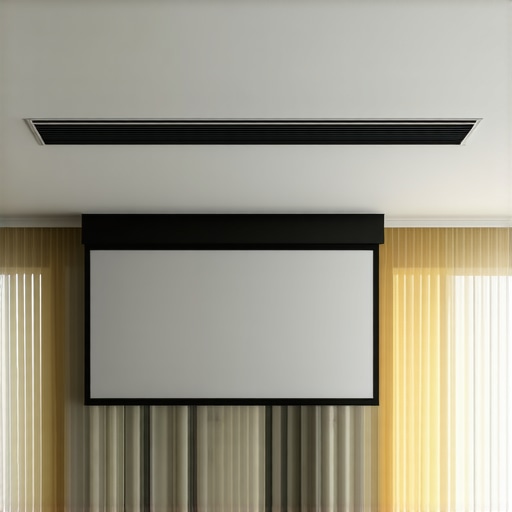
I remember the exact moment I realized my home theater was falling short. It was a bright Saturday afternoon, and I eagerly plopped onto my couch, expecting that immersive viewing experience. Instead, I was greeted with a washed-out, nearly indecipherable image. The culprit? A subpar projection screen in a room flooded with natural light. That lightbulb moment prompted me to dive into the world of Top Pull-Down Screen Solutions for Bright Room Home Theater. If you’ve faced similar frustrations—panicked when bright sunlight ruins your movie nights—don’t worry, you’re not alone. Today, I’ll share how I turned my space around with a solution that actually works, even in challenging lighting conditions.
How Bright Rooms Can Kill Your Home Theater Experience—and What to Do About It
Bright rooms are a common hurdle for home theater enthusiasts. You want that cinematic magic, but sunlight or ambient light constantly washes out your screen image. Conventional screens just can’t keep up in these conditions. This is where high-gain screens and specialized screen technologies come into play. Understanding the importance of screen gain can be a game-changer, enabling you to boost brightness and contrast without sacrificing image clarity. But before you invest in the first shiny new screen, it helps to learn from my early mistake: I tried to force a standard matte screen into a bright room, which resulted in dull, washed-out visuals. Yes, I wasted months chasing a solution that simply wasn’t designed for my environment. Turning my image quality around involved not just choosing the right type of screen—like a pull-down screen designed for high brightness—but also understanding key specs and installation tips. Ready to discover how to make your space shine? Let’s delve into the specifics of selecting the best screen for your bright room home theater.
Select the Right Screen for Your Bright Room
Choosing a screen that matches your lighting conditions is critical. Opt for a pull-down screen designed for high brightness and high gain capabilities. I once bought a standard matte screen expecting it to handle daylight, but it resulted in dull images. Instead, I installed a specialized high-gain pull-down screen with an ALR (Ambient Light Rejection) layer, which significantly improved contrast even in daylight. Think of the screen like sunglasses for your projector—more reflective layers mean better resistance to ambient light, letting your images stay vibrant.
Measure Your Space to Customize Installation
Accurate measurement of your projection area ensures optimal positioning. Use a tape measure to determine the ideal distance from your projector to the screen, aiming for a 1.5 to 2.5 times the width of your image. I had to redo my setup when I realized my original mounting was too high, causing image distortion. Mark the wall with painter’s tape to visualize the size and position before installing. This step is similar to tuning a musical instrument—precision here yields a harmonious viewing experience.
Anchor the Screen Securely for Consistent Image Quality
Proper installation prevents slack that causes ripples or uneven edges. With my DIY mount, I used the guidelines from a fixed-frame screen installation guide. Use a level and stud finder to ensure the mount is perfectly horizontal. Imagine your screen like a sail—if it’s not taut, the image will wobble and distort. Tight, secure mounting maintains tension, leading to sharper, more consistent images especially in bright rooms where clarity is key.
Adjust Projector Settings to Maximize Brightness
Once the screen is installed, tweak your projector’s settings. Increase the contrast and brightness levels to match your screen’s gain capabilities. I also calibrated the color temperature to reduce washout effects. Consider enabling features like dynamic iris or tone mapping if your projector supports them—they help optimize contrast dynamically. Think of this as fine-tuning a camera for daylight shoots; small adjustments make a huge difference in image clarity.
Create a Reflective Environment to Enhance Light Rejection
Minimize stray ambient light by coating reflective surfaces like walls or ceiling with matte blackout paint or adding curtains. My living room’s wall decor was causing unwanted reflections, so I covered it with blackout fabric. The effect was immediate: brighter whites, deeper blacks, and improved contrast. This is akin to controlling light in a photography studio—less scatter means crisper images. Experiment with different arrangements until glare is minimized, and your projector’s high-gain screen can do its job effectively.
Close-up of a high-gain pull-down projection screen with reflective ALR layer, demonstrating advanced light rejection technology for bright environments.
Many home theater enthusiasts assume that all high-gain, ALR (Ambient Light Rejection) screens are created equal, but that’s far from the truth. A prevalent myth is that increasing screen gain will automatically resolve bright-room visibility issues. In reality, higher gain can lead to hotspots and uneven brightness if not carefully engineered. Advanced manufacturers implement sophisticated optical layers to distribute light uniformly, but many consumers overlook these nuances, ending up with uneven images or glare spots. Additionally, some believe that ALR screens work universally — yet, their effectiveness heavily depends on proper installation and room conditions. For example, choosing a screen with an optimized optical layer designed specifically for ambient light rather than relying solely on high gain is crucial for achieving consistent brightness and contrast. Mistakes often occur when users select a screen based solely on gain ratings without considering the underlying technology or room setup.
Have you ever fallen into this trap? Let me know in the comments.
The misconception that pull-down screens are inferior to fixed-frame options is also widespread. Many assume fixed-frame screens are inherently superior, but this overlooks the growing advancements in motorized pull-down designs. Today’s high-quality pull-down screens feature tensioned surfaces and ALR layers comparable to fixed frames, with the added advantage of flexibility in space utilization. An often-overlooked detail is the installation aspect — a poorly mounted pull-down can suffer from slack or ripples, diminishing image quality. For advanced users, understanding the subtle differences between various projection screen types is essential. The key is aligning your choice with your room’s lighting, space constraints, and viewing preferences.
A crucial nuance many miss involves the selection of screen gain relative to projector lumens and room reflectivity. Simply opting for the highest gain isn’t always best; instead, an optimal gain balances output and uniformity. The optimal gain also depends on the projector’s brightness capabilities. For instance, in rooms with high ambient light, a higher gain screen enhances brightness, but it can sacrifice viewing angles and off-axis contrast. Conversely, lower gain screens offer wider viewing angles but may require a projector with higher lumen output or additional light control measures.
Make sure to consider these complexities, as overlooking them can lead to disappointing results. For in-depth insights tailored to your setup, check out our comprehensive guide on selecting the right ALR screen for your environment.
Most importantly, avoid the trap of overgeneralizing technologies. ALR, high-gain, fixed-frame, or pull-down — each has subtleties that impact performance in specific scenarios. Influenced by expert insights and the latest breakthroughs, understanding the nuanced interplay of these factors ensures your home theater remains a source of cinematic joy rather than frustration.
Tools That Keep Your Screen Perfect Over Time
Maintaining the quality of your projection screen, especially high-gain or ALR types, requires the right tools and a bit of routine care. I personally rely on microfiber cloths and gentle cleaning solutions recommended by manufacturers to prevent dust and smudges that can degrade image clarity. For delicate materials like specialized ALR layers, avoiding abrasive cleaners is crucial—simply using a microfiber cloth dampened with distilled water often suffices. Additionally, investing in a portable vacuum with a soft brush attachment helps remove dust from hard-to-reach creases or adjustable mounts, preventing buildup that can cause ripples or slack over time.
Beyond cleaning, regular inspections of the mounting hardware are essential. I use a torque wrench to ensure all bolts and screws are tight, preventing sagging or misalignment that can distort projection quality. When I notice slight wrinkles or slack, I refer to the installation guide to adjust tension or realign the frame properly. Keeping the environment dust-free and avoiding high humidity prevents mold or deterioration, especially in rooms where screens are retracted or stored temporarily.
Where do I go to keep my equipment functioning effortlessly?
I recommend using tools from trusted brands that specialize in screen maintenance, such as soft cloths from LensPen or Zeiss, specifically designed for delicate surfaces. These tools help prevent scratches while removing stubborn dirt or fingerprints. In addition, employing an air compressor with a precision nozzle can clear dust from tight spaces without risking damage—a tactic I’ve found invaluable during periodic upkeep.
Looking ahead, advances in self-cleaning coating technologies are likely to make long-term maintenance easier. Companies are now experimenting with nano-coatings that repel dust and prevent smudging, promising a future where screens stay pristine with minimal effort. To stay ahead, regularly check for updates on these tech breakthroughs on sites like our dedicated page.
How do I maintain my projection screen over time?
The key to keeping your screen performing at its best involves consistent cleaning, secure mounting, and environmental control. Schedule routine inspections every 6-12 months—adjust frequency based on usage and environment. For instance, rooms with pets or high traffic may require more frequent dusting and checking. Using the right cleaning tools and techniques, like soft microfiber cloths and gentle cleaners, ensures longevity without damaging delicate surfaces. Moreover, complement this with room conditions that minimize dust and humidity, such as air purifiers and dehumidifiers.
By staying proactive, you not only preserve image clarity but also extend the lifespan of your investment. For detailed advice tailored to your specific screen type, consulting sources like this guide can be incredibly helpful. Personally, I find that setting a quarterly maintenance routine with these tools drastically reduces long-term issues. Try incorporating a microfiber cloth clean and a quick hardware check into your annual setup—it’s a small step that yields big results for your home theater’s performance.
After navigating the complexities of selecting the perfect projection setup for my bright room, I realized that the journey to cinematic perfection involves more than just choosing a high-gain pull-down screen. It demands a nuanced understanding of your unique space, the technology at play, and the subtle tactics that turn ordinary viewing into extraordinary experience. This deep dive into my lessons learned revealed that no single solution fits all — instead, tailored adjustments and informed choices are key to conquering ambient light challenges and achieving pristine image quality.
What I Wish Someone Told Me Before I Started
- Room Reflection Matters More Than You Think: I underestimated how much wall color, furnishings, and ambient reflections could sap contrast. Painting walls matte black or deep gray created a huge difference, emphasizing the importance of environment control in bright rooms.
- Screen Gain Is a Double-Edged Sword: Higher gain screens boost brightness but can introduce hotspots. Balancing gain with projector lumen output and room size is essential for uniform images.
- Room Specifics Drive Tech Choices: Windows, curtains, and exterior light sources dramatically influence the effectiveness of ALR screens. Customizing treatments instead of generic solutions pays off in clarity and contrast.
- Installation Is Everything: Proper mounting, tensioning, and alignment transform a good screen into a great one. Even minor slack or tilt can cause image degradation, especially in high-gain setups.
- Calibration Makes the Difference: Tuning projector settings after installation maximizes the benefits of your screen choice. Don’t skip this step; calibration unlocks peak performance.
Your Personalized Toolkit for Bright Room Brilliance
My go-to resources include detailed guides on ALR screen innovations and projection screen selection tips. Trusted brands like Elite Screens and Stewart Filmscreen are my picks for quality and reliability, especially when installing high-gain or ALR solutions. They provide the durability and optical clarity needed for consistent results in bright environments. Additionally, engaging with community forums and expert blogs keeps me updated on new technologies, like latest ALR breakthroughs, ensuring I stay ahead of the curve.
Make Your Viewing Dreams a Reality
Deciding to upgrade your home theater in a bright room isn’t just about hardware—it’s about creating a space where cinematic magic can thrive regardless of ambient light. With strategic choices, careful environmental modifications, and a little patience, you can transform your setup into a vivid, immersive sanctuary. Remember, the journey to the perfect home theater is ongoing; stay curious, experiment with your environment, and let your passion guide every adjustment. Your future self will thank you for the effort and dedication you invest today.
How have you tackled ambient light challenges in your home theater? Share your experiences or ask for advice below — I’d love to hear your stories!
No Responses