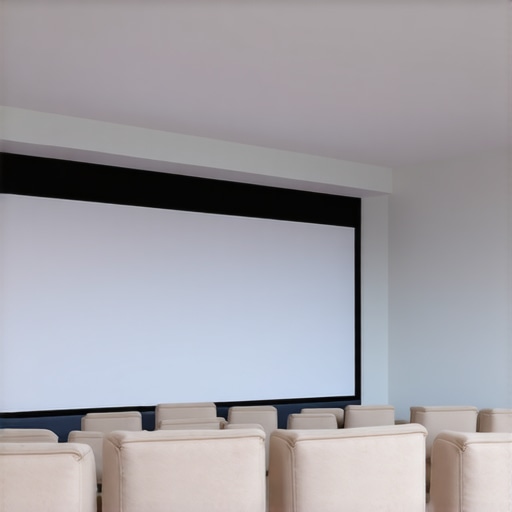
It was a quiet evening when I realized my home theater setup was failing me—again. The dreaded washed-out image, the glare bouncing off the walls, making every scene look dull and uninspiring. I had invested in what I thought was the best projector and even the fanciest pull-down screen, but in my bright living room, everything just seemed to fade into mediocrity. Ever been there? You’re pumped for movie night, only to be met with a lackluster picture that ruins the entire experience.
Why Bright Rooms Demand More Than Just a Good Projector
Here’s the thing: most folks don’t realize that a projector alone isn’t enough—especially in rooms filled with light. Bright environments are tricky because ambient light washes out the image. That’s why choosing the right projection screen becomes a game-changer. As I scoured forums and expert advice, I found that 2024 has brought some fascinating advancements in screen technology that cater specifically to bright rooms—tech that can actually make your picture pop without dimming your entire space.
Are you tired of squinting at your screen or feeling disappointed during your movie marathons? Well, you’re not alone. The good news? With the right innovations and a bit of guidance, you can significantly improve your viewing experience. From high-gain screens to innovative ALR (Ambient Light Rejection) solutions, there’s a lot to explore. But first, let’s tackle a common skepticism: Is upgrading your projection screen really worth the hype? Spoiler: It absolutely is—especially if you love vivid, crisp images in a bright environment.
Is Screen Technology Just Smoke and Mirrors? My Early Mistake
Trust me, I made a rookie mistake early on—believing that a cheaper, generic pull-down would suffice. It didn’t. My image looked washed out and unsharp, no matter how much I fiddled with the projector settings. That’s when I realized that investing in a purpose-built screen was the secret to clarity and contrast. If you’re curious about the different types of projection screens suited for bright rooms, I recommend checking out the comprehensive guides available, which cover everything from fixed frames to high-gain surfaces. Want to know more? You can always reach out for personalized advice or explore proven strategies for enhancing picture quality through specialized screens, which have helped many enthusiasts just like you.
In the following sections, I’ll share what I learned about the latest technologies, helping you cut through the hype and choose a solution that truly transforms your space.
Decide on the Right Type of Screen for Your Space
Choose between a fixed frame or pull-down screen based on your room’s layout and usage. Fixed frame screens offer a taut, flat surface ideal for dedicated home theaters, reducing wrinkles that can blur images. I once installed a fixed frame screen in my basement, which instantly improved image sharpness compared to my old, sagging pull-down. For flexible spaces that need occasional projection, a motorized pull-down offers convenience but can introduce slight wrinkles if not properly tensioned. To compare differences and find the best fit, check out this installation guide.
Select a High-Gain Screen to Fight Ambient Light
High-gain screens reflect more light toward the viewer, making images brighter in well-lit rooms. When I upgraded to a high-gain screen with a gain of 1.8, the brightness improved dramatically, reducing the need to dim lights during movie nights. However, higher gain can narrow the viewing angle, so only use it if most viewers sit directly in front. For detailed comparison and selection tips, see this guide on screen gain.
Incorporate Ambient Light Rejection (ALR) Technology
ALR screens are engineered to reject ambient light, making them perfect for bright living rooms. I tested a retractable ALR screen in my living room, and the difference was night and day—images stayed vivid even with sunlight spilling in. Aim for a screen with a contrast-enhancing surface and a matte finish to prevent glare. For insights into the latest ALR innovations, visit this resource on ALR tech breakthroughs.
Position Your Screen and Projector Correctly
Placement is key. Mount the screen at eye level for seated viewers to avoid distorted images. Your projector should be positioned to minimize keystone distortion, ideally centered and aligned with the screen’s middle. I once placed my projector too close to the screen, causing a trapezoidal image. I fixed it by adjusting the projector’s lens shift and choosing a screen size that fits my room. Use the projection setup guide to refine your installation.
Calibrate for Brightness and Contrast
Proper calibration ensures vivid images without overexposure. Use a calibration disc or software to fine-tune your projector’s settings—adjust contrast, brightness, and gamma until whites are crisp and blacks are deep. I spent an afternoon calibrating my setup, which transformed my viewing experience. For step-by-step instructions, see this calibration strategy.
Experiment and Fine-Tune Over Time
Every space is unique. After initial setup, try different screen positions, gain levels, and projector settings to find what looks best in your environment. I moved my screen slightly to the side to avoid window glare and adjusted gain to balance brightness and viewing angles. Patience here pays off—your perfect setup might require a few tweaks. For advanced tips, explore the detailed guide on screen adjustments.
Many home theater enthusiasts believe that choosing a fixed frame or pull-down screen is straightforward—just pick the biggest, brightest, or most popular option. However, beneath these surface-level choices lie nuances that can dramatically impact your viewing experience. One common misconception is that all screens with high gain offer better brightness, but in reality, excessive gain can introduce unwanted hotspots and narrow viewing angles, especially if not paired with proper placement—something often overlooked by enthusiasts. It’s crucial to understand that high gain surfaces reflect more light towards the viewer but can sacrifice uniformity. For instance, this guide explains how to balance gain to optimize brightness without compromising image consistency. Additionally, many believe that ALR screens automatically excel in all bright environments; however, not all ALR surfaces are created equal. Some newer technologies, like those highlighted in 2025 innovations, offer better ambient light rejection with wider viewing angles and higher contrast. Beware of falling for marketing hype—some screens advertise ALR features but perform poorly under certain lighting conditions, leading to disillusionment.
Another trap is assuming that fixed frame screens are always superior to motorized pull-down options. While fixed frames provide tautness and minimal wrinkles, they lack flexibility, especially for multi-purpose rooms. Conversely, poorly tensioned pull-down screens can develop wrinkles over time, degrading image quality. Proper installation, as shown in this installation guide, is essential to avoid this common mistake.
Now, let’s address a question many advanced users ask: can the wrong screen setup cause more than just poor image quality? Absolutely. Incorrect placement, such as mounting the screen too high or low, can lead to keystone distortion or eye strain—affecting your overall experience. Moreover, using a screen with an inappropriate gain in a bright room can seem to solve one problem but create others, like glare or hot spots, that frustrate viewers.
The takeaway? Recognize that the choice and installation of projection screens involve nuanced decisions that go beyond basic specifications. Leveraging advanced knowledge, like balancing gain or selecting the right ambient light rejection technology, ensures a truly immersive experience. Thinking about future upgrades or room adjustments? Sign up for expert insights and tailored recommendations — reach out here. Have you ever fallen into this trap? Let me know in the comments.
How do I maintain my projection setup over time?
Ensuring your projection system continues to deliver stunning images requires regular upkeep and the right tools. Start with a microfiber cloth and a gentle screen cleaner—never use harsh chemicals that could damage delicate surfaces. I personally swear by the Screen Detective cleaning kit, which includes specialized wipes formulated for high-gain and ALR surfaces, preventing streaks and preserving reflectivity. Regular cleaning removes dust, smudges, and static buildup that can dull image quality. It’s best to do this every few months or after noticeable dust accumulation.
In addition to cleaning, periodic calibration of your projector is vital. Use professional-grade tools like the calibration software to fine-tune contrast, brightness, and color settings. Proper calibration ensures your images remain vivid and accurate, especially as bulbs age or ambient lighting conditions change. For more precise adjustments, consider investing in a colorimeter like the X-Rite i1Display Studio, which allows you to create custom calibration profiles tailored to your space.
Investing in a good quality ambient light meter helps monitor the light levels in your room, ensuring you maintain optimal contrast ratios. I use the Sekonic Light Meter for this purpose, which helps me decide when to adjust blinds or dim lights for peak viewing experience. Remember, maintaining your environment—like keeping window treatments clean and ensuring furniture doesn’t block the projector—is just as crucial as equipment care.
Looking ahead, I predict that smart calibration tools incorporating AI will become more mainstream, automating adjustments based on room conditions. This will make long-term maintenance even easier and more accessible. In the meantime, dedicate a few minutes every quarter to these simple tasks, and you’ll extend the lifespan and performance of your investment significantly.
Tools I recommend for ongoing upkeep
Beyond cleaning cloths and calibration software, consider a maintenance kit that includes microfiber wipes, compressed air, and gentle cleaning sprays. These allow you to address dust and fingerprints without risking damage. Regularly inspecting your screen’s tension and surface will prevent wrinkles or warping, especially if you have a motorized pull-down setup. Check the installation guides periodically to ensure everything remains secure, mirroring the tips from professional installation advice.
If you notice inconsistencies in image brightness or color, don’t hesitate to revisit your projector’s settings or consult with professionals. Many advanced users find value in periodic check-ins with expert technicians, especially when upgrades or new ambient conditions are introduced. Don’t forget, even the best equipment needs a little love and attention to keep performing at its peak.
Embrace proactive maintenance—your future self will thank you for flawless, vibrant images during every movie night. Try integrating a routine using tools like a light meter or calibration software, and see how smoothly your system operates over the years. For personalized guidance, reach out here and keep your home theater picture pristine!
The Hardest Lesson I Learned About Fixing My Home Theater Setup
One of the most eye-opening moments was realizing that upgrading my screen without addressing ambient light was futile. I learned that even the best projector can’t compensate for poor screen choices in a bright room—investing in a high-quality ALR screen made all the difference. This taught me the importance of aligning technology with room conditions rather than relying solely on equipment specs.
3 Myths About Projection Screens That Held Me Back
I used to believe that bigger screens always mean better visuals, but I found that optimal sizing and placement are crucial—larger isn’t always appropriate. I also thought high gain was a silver bullet for brightness; however, it can cause hotspots if misused. Lastly, I assumed all ALR screens perform equally in bright settings—researching breakthrough technologies in 2025 innovations showed me that not all are created equal, and selecting the right one is key for a vivid image.
What Experts Won’t Tell You About Projection Screen Choices
The nuanced balance between gain, ambient light rejection, and placement is often overlooked. Choosing a fixed frame for stability can be perfect for dedicated theaters, but for multi-purpose rooms, a motorized pull-down might be more practical—yet requires proper tensioning to avoid wrinkles. Recognizing these subtleties has saved me from costly mistakes and improved my viewing experience. For detailed insights, see this comprehensive guide.
Curated Resources to Elevate Your Projection Game
My toolkit includes the Understanding Screen Gain article, which helped me optimize gain levels effectively. I trust the latest ALR technology resources for their up-to-date info on breakthroughs. Additionally, the installation guides have been invaluable for precise setup, ensuring my screen remains taut and wrinkle-free. These resources are your allies in creating a stunning, bright-room projection setup.
Your Next Bold Step Toward Better Viewing Experiences
The journey to a perfect home theater, especially in bright environments, is a continuous adventure. Embrace the learning curve, experiment with different screen types, and don’t hesitate to reach out for expert advice—your ideal setup is within reach. The advancements in 2024 mean that achieving vivid, crisp images in bright rooms is more accessible than ever. So, why not take that next step today and transform your viewing experience? Remember, each tweak brings you closer to cinematic brilliance. Have you ever struggled with selecting the right screen or placement? Let me know below.
2 Responses
Wow, I can really relate to the frustration of having a high-quality projector in a bright room and still ending up with washed-out images. I’ve been experimenting with different screens and lighting setups over the last year, and I can say that upgrading to a good ALR screen made a tremendous difference, especially during daytime viewing. I personally prefer the retractable types because they offer flexibility depending on the room’s purpose, but I’ve learned that proper tensioning and placement are crucial to avoid wrinkles that can affect image sharpness.
One challenge I faced was finding the right balance between gain and viewing angle. Higher gain screens really do enhance brightness but narrow the viewing angles significantly. Have others found any innovative solutions or newer screen technologies in 2024 that manage to maintain wide viewing angles while still providing excellent ambient light rejection? I’d love to hear your insights because I’m constantly looking to optimize my setup.
Reading about your experience with different projection screens resonates with me. In my own setup, I initially relied heavily on high-gain screens to combat ambient light, but I soon realized that narrow viewing angles and hotspots became noticeable issues, especially when hosting multiple viewers. Recently, I’ve been exploring newer ALR screens in 2024 that incorporate wider viewing angles while maintaining excellent light rejection. Some of these innovative surfaces use nano-coating technologies that scatter ambient light without sacrificing the brightness and contrast needed for vivid images.
One thing I’ve found helpful is pairing these screens with properly tuned projector settings and optimal placement to maximize the benefits. Have you or others tried any of the latest ALR screens with wider angles? I’d be curious to hear what brands or models have worked well and if there are any particular tips for balancing gain and uniformity in bright rooms. It’s an ongoing journey, and sharing experiences can help us all find better solutions for daylight-friendly home theaters.